| My success in capturing wildlife on camera has been as unpredictable as the weather so far this year! Hopefully things will start to improve – on both accounts. In the meantime, here’s a few from recent months. |
 |
 |
 |
 |
 |
 |
Showing posts with label Blue Tit. Show all posts
Showing posts with label Blue Tit. Show all posts
Sunday, 17 May 2015
Sunday, 6 April 2014
Hiding in a Hide
| Anyone who reads this blog knows I’m not a particular fan of using hides although I do sometimes – usually as a stop off while out and about or in Winter, as a place to get some respite from the weather. I can sit for hours outside waiting for the opportunity to see an animal, but do the same in a hide and I’m completely bored. I think because when inside one, you are removed from nature and the environment, just viewing it through a window of a large wooden structure. There is another reason and that, ironically is other photographers. To be fair it’s by no means all as, over the years I have met some really nice and interesting ones and they can be a good source of sharing knowledge, but there seems to be with the advent of popular digital photography a new breed of photographers. Combine this with Flickr and you have photographers who seem to ‘collect’ images, usually of birds and particularly of more unusual or exotic ones, which are then to be shown like a ‘badge of honour’. I recently made a trip to a hide in the hope of specifically seeing and photographing Kingfishers as my luck this year has consisted of glimpses or distant views. It was a damp and miserable day so I thought few would out and about and in the hide, but it was full of photographers obviously hoping for the same sight as me. Unfortunately there was little chance of a good window seat, so I just sat at the back window and couldn’t help but listen to the others talking. Most of them had been there for a few hours already on the day and had been coming in day after day this week and, a few, the week before as well. I do admire their dedication and one of them was showing his previous successful images of a Kingfisher on his ipad, but it did make me again, wonder. Recently in the news there was a situation in Florida where a well known, professional photographer was disturbing a protected bird by (apparently) delivery making them fly off their nesting area so his tour of other photographers he had brought along could photograph the bird in flight. Obviously, this does not compare with someone who simply enjoys spending a lot of time in a hide, but I keep wondering why do people take wildlife photographs? Everyone will have their own reasons and as far as I’m concerned as long as they are enjoying themselves and don’t disturb the wildlife, then good for them. But it also brings me back to why I generally feel uncomfortable being around a group of what I call ‘drive by photographers’ (They drive to a hide or location but never walk more than a few metres from their cars). Dressed for the most part head to foot in camouflage, many had some very expensive looking gear, it seemed more like a social gathering with little interest in what was happening outside except for the odd appearance of the Kingfisher or quiet periods when a few would take some pictures of the more common birds around. One of the things I am very conscious about is that public hides are for everyone, including non photographers so having one that is chocker block full of them that have been camped there for hours, often means that other people who want to simply watch any and all wildlife, feel a bit intimidated. An elderly couple did come in and promptly left. It was interesting just to be an observer and as the crowd thinned out I was able to get a ‘front view’ seat. The guy next to me was rattling off shots like there was no tomorrow. When the Bullfinch below landed on the perch he took four bursts of four frames followed by another two in the space of around five seconds. I took three. In old money his had taken the equivalent to a role of film! Maybe coming from a film background, I still take my shots more sparingly and with thought. Rather than just shoot at ten frames per second, I had my camera set so could take one shot but if I kept my finger down, it would do around five. This way I could observe the bird and wait until I thought the ideal pose was met – light in the eyes and a nice portrait. I looked at his LCD as he was checking his images and he had a lot of images of the head looking away or with his back to the camera but also had a few similar to mine that I could see. I guess it’s all part of the ‘spray and pray’ culture of the modern photographer but it reminded me of the story I had heard about a mimic bird who was heard in a remote part of, I think Australia, and it was making the sound of a cameras rapid drive! There is another disadvantage of using a hide. The bird images below show them on a perch that is probably now very well known on Flickr and other sites so originality can be lost. I will carry on using hides but they don’t replace the enjoyment of solitude and the mixture of excitement and tranquillity of actually being out in nature, of using your own skills as a naturalist and photographer to achieve an image or just simply seeing a wild animal in its natural surroundings. |
 |
 |
 |
 |
 |
 |
 |
 |
 |
 |
 |
Sunday, 23 March 2014
A bit of hit and miss
| 3:45am and I’m awake. I had set the alarm for 5:30 for an early start with my planned visit of the weekend. I could either try and go back to sleep and when the alarm wakes me I would probably feel really tired and unmotivated to get up, or I could just get up now and feel the effects of the lack of sleep later. I choose the latter. At least the forecast’s for sunny spells, although the brief mild weather is gone getting colder again. Arriving on location by seven in the morning at my favourite woodland location, I planned to photograph Roe Deer. I’ve been doing so here for about six years and have come to know the area well and, in particular, the habits of the small local population of the Deer that live here. I have ‘my spot’ where I like to sit which is at an intersection of three routes used by the Roe coming in from their early feeding to their day time lay up. There are two routes I can take to get there – the direct one which is usually uneventful or the longer one which is where the deer themselves follow or at least cross over in sections. I decide on this route. To make an analogy, it is like following a bus route. The bus is only going every, say twenty minutes but stops every now and then. Time it wrong and you might just always be behind (or ahead) of it and not see it. Of course Roe deer are not a regular service (mind you nor are our local buses). If you are quiet, move slowly, and you're lucky with the timing, you might be able to come right up behind one or more of the deer who have stopped to feed on route. Some of my best images were gained using this method and my small 300mm f4 lens. Carrying a bigger lens as I was today, can be too slow and clumsy as you need to be quick and agile. It wasn’t long before I came across the first one but the recent strong winds had blown a lot of twigs and branches onto the woodland floor making stealth difficult, so it heard me before I saw it and, although wasn’t too alarmed by my presence, moved away. Believing that was probably it for a while and because the part of the area I was moving into now I’d rarely seen any deer in the past, I sped up, taking less care. Within a minute I stumbled across a male Roe who I hadn’t seen behind the tree ahead, metres away. I don’t know who got the bigger fright! Needless to say it ran off, making that barking sound that Roe do when alarmed. Magpies and then it seemed every other animal in a mile radius joined in the alarm chorus. My ‘stealthiness’ was definitely blown. No more sightings and I reached my planned location, made myself confortable and waited. Because this was an intersection of three routes, I sat so that I could clearly see two of these either side of me with the third behind where they would cross by me either to my left or right. With my back against a tree and netting draped over me I had to choose which direction set my camera up to point and I chose right. After about fifty minutes I thought I had heard some noise behind me and turned to my left. A big mistake as two Roe Deer were metres away and my movement alerted them to my presence and like my previous encounter both legged it. Had I just stayed put and let them walk pass, I would have been in a better position to have photographed them. Annoyed with myself, I decided to give up and move on. Later I was able to photograph some smaller, but more obliging critters so the day wasn’t a total miss. |
 |
Classic Nuthatch pose – both landscape and portrait |
 |
 Blue Tit |
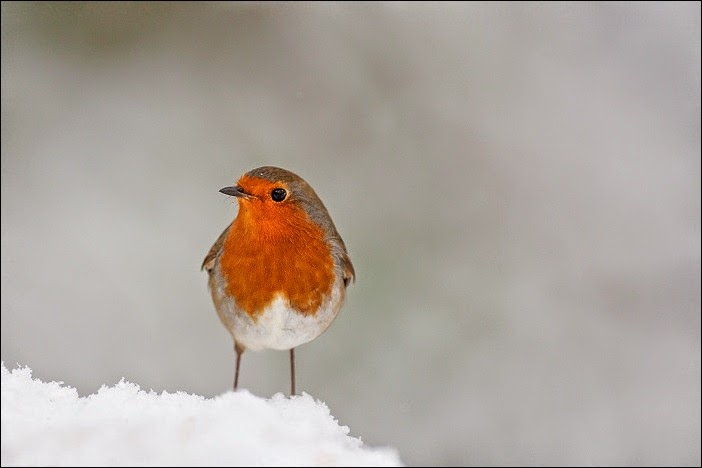
 The idyllic and loveable Robin |
 |
 Another Blue Tit pose |
 A not so glamorous Brown Rat |
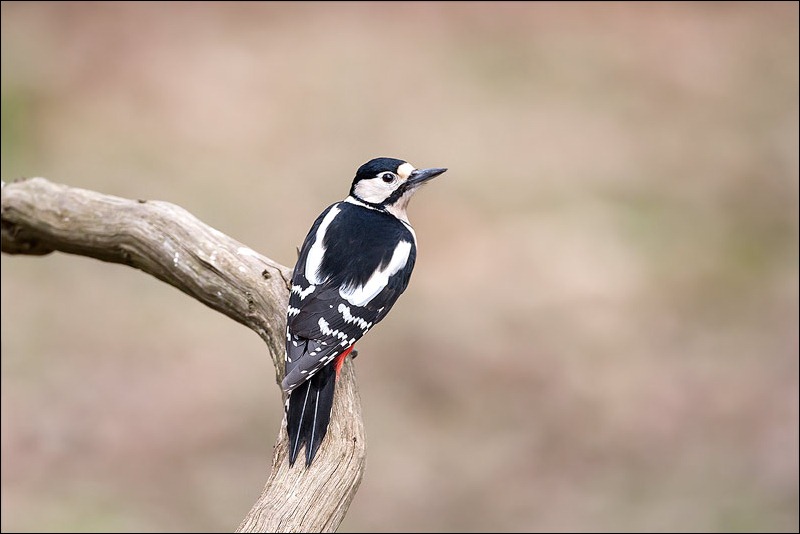
 A Great Spotted Woodpecker makes an appearance |
 As does a Magpie |
 And another Rat |
 |
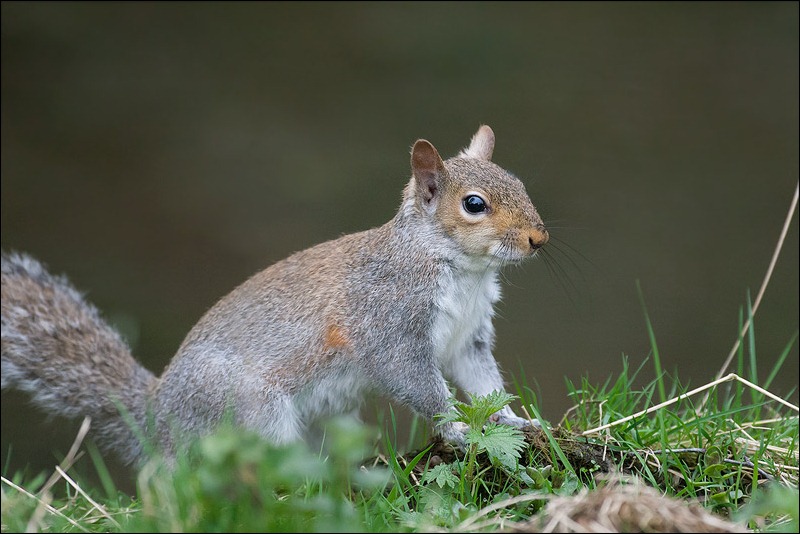
 It’s a ‘Tree Rat’ |
 Not welcomed by the Woodpecker |
 And so beats a hasty retreat |
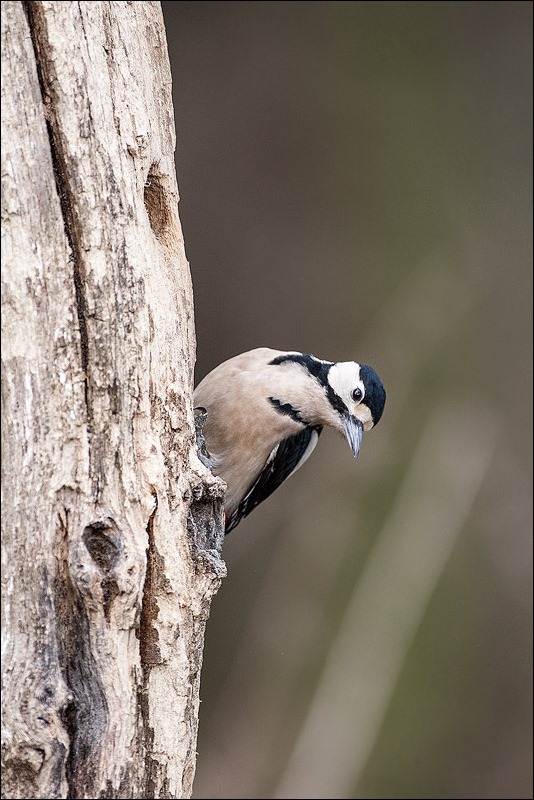 Making sure it’s gone |
 Back to normal |
 |
Tuesday, 22 January 2013
Just a Few Birds
| With no luck in my attempt to get some ‘iconic’ images of Deer or Foxes in winter settings, I turned to the more and relatively easy option of birds to photograph. Relatively easy, because, though easier to find, photographing small birds that are constantly moving and in very poor lighting conditions, put photographer and equipment to the test. All images below had to be shot wide open to get the fastest possible shutter speed. This meant a very narrow depth of field and along with a shutter speed usually not fast enough to avoid a combination of freezing the action and avoiding camera shake, some two thirds of the resulting images were out of focus. |
 Great Tit - Sigma 500mm - 1/1000 sec, f/4.5, ISO 1600 |
| |
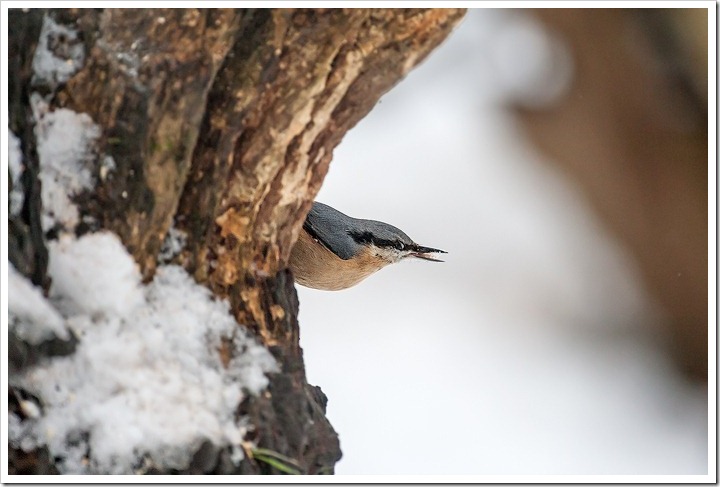 Nuthatch - Sigma 500mm - 1/1250 sec, f/4.5, ISO 3200 |
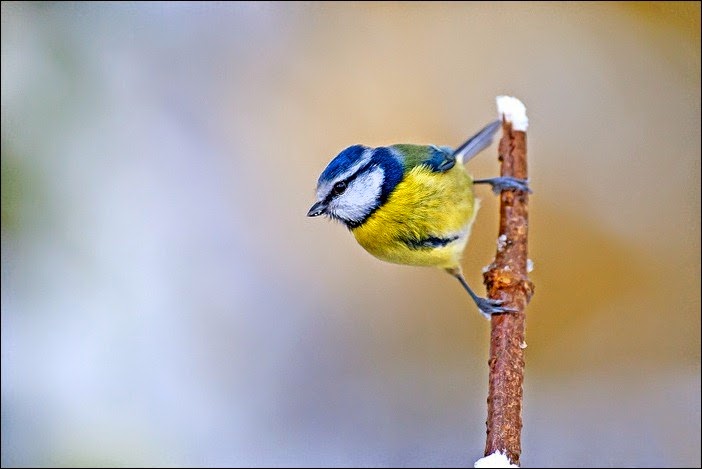
 Blue Tit - Sigma 500mm - 1/800 sec, f/4.5, ISO 3200 |
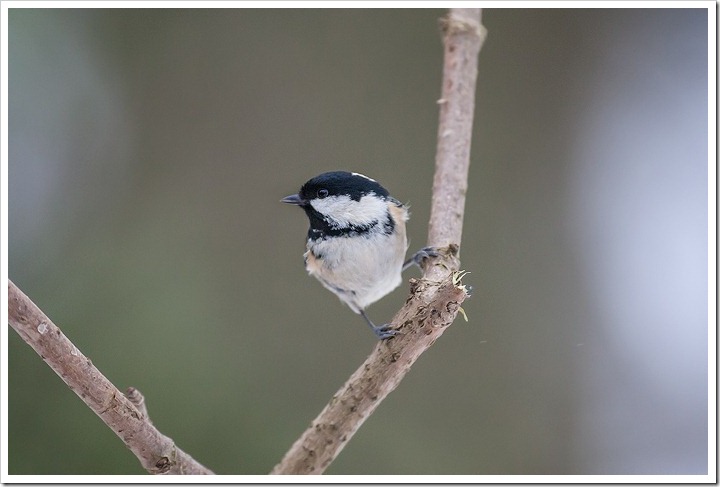 Coal Tit - Sigma 500mm - 1/800 sec, f/4.5, ISO 3200 |
 Reed Bunting - Sigma 500mm - 1/640 sec, f/4.5, ISO 3200 |
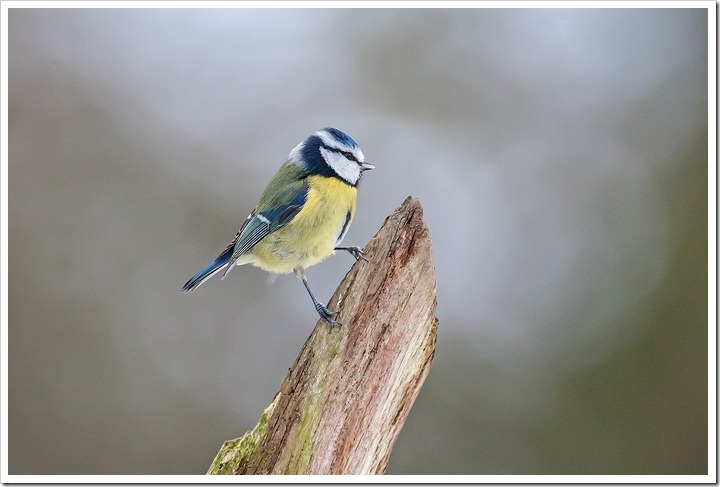 Blue Tit - Sigma 500mm + 1x4 converter - 1/1320 sec, f6/3, ISO 3200 |
 Nuthatch - Sigma 500mm - 1/500 sec, f/4.5, ISO 3200 |
 Great Spotted Woodpecker - Sigma 500mm + 1x4 converter - 1/200 sec, f6/3, ISO 3200 |
Thursday, 17 January 2013
Snow, Muddy and Murky
| A new fall of snow for me is not just a good photogenic opportunity, but an ideal chance to see what is out and about by the tracks left behind. With a fresh covering of snow, I went out earlier this week in the hope to check on what mammal wildlife was around in the local area, specifically Foxes which seem to have been more elusive in the last few years. The forecast was for a temperature of around around minus one, very little wind, mostly overcast and maybe a flurry of snow later on so it was ideal. Since arriving on location mid morning I wasn’t particularly expecting to see any mammals but it wasn’t long until I did find the main tracks I was after – Foxes. They were slightly covered up suggesting they had been made very early morning as there had been a lot of snow the night before and another light fall early morning. They followed a typical path showing two foxes, perhaps together though one track went off in another direction further up the trail. I had hoped to use what I found to find out better their movements and maybe a den but the tracks showed me what I already new about their route but at least I new they were still active. Unfortunately, due to a combination of the muddy conditions and the second covering of snow it was hard to follow the Foxes tracks as they tended to use the same pathways as people, which were churned up due to the last few months of heavy rain. |
 |
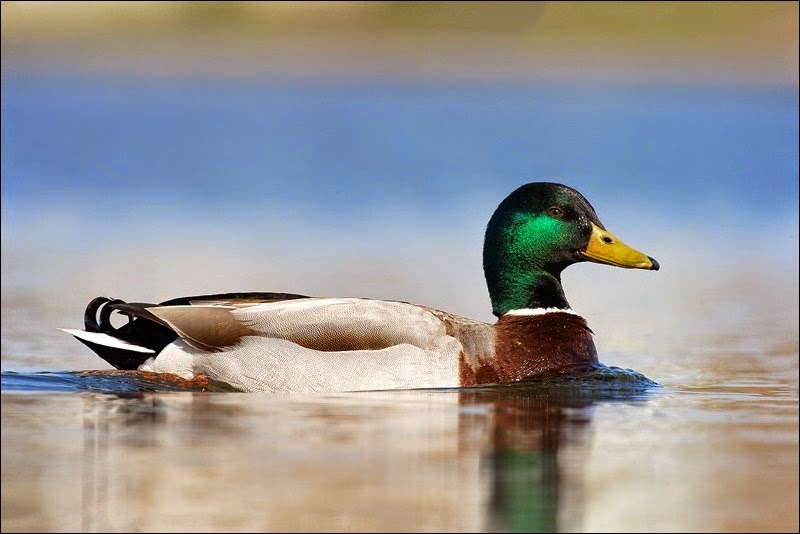
| I walked around for a while until deciding to go to one of my favourite vantage points when photographing Roe Deer in the off chance that there may still be some knocking around this late and so photographing one in this idyllic surrounding. Just before I got there, three Roe’s went by the opening in the woods where my camera lens would have been pointing a minute later had I arrived earlier or them later! After waiting thirty minutes or so encase of any further sightings, I then walked around for an hour when it started to snow – heavily! What an image I could get if only I could see and photograph a deer in this. They and the rest of the wildlife probably had more sense as the only living creatures around were some Mallards on the lake, seemingly indifferent to the conditions and, like me, had a covering on snow. |
 |
 |
 |
 |
 |
| Despite the conditions, I still carried my camera and lens around rather than putting back in my bag just in case ‘that’ opportunity arose. This, however this put this equipment to the test as it became covered in snow. The camera shouldn’t have had any problems being weather resistant, but my lens only had it camouflaged covering for protection so I draped my netting around it too. The problem seemed more about getting any snow on the front element which, as shown during my previous outing, can ruin a shot. The Sigma does come with a soft lens cap but this is only really useful once the lens has been packed away. It doesn’t fit properly when the lens hood is on and it would easily fall off. Amazingly, I can’t find a single place in this country that makes alternative lens caps for this lens though I have heard of people making their own out of food containers which I might try as I can’t rely on the lens hoods depth alone for protection. As quickly as the snow started it ended, leaving the landscape with a fresh coat of snow, covering up any of the tracks I had hoped to find but I decided to continue having a walk around. |
 |
 |
 |
 |
 |
|
Although you can barely see them the tracks above look like Rabbit ones and, in this area, they are nocturnal as I have very rarely seen them during the day. It might explain why the Foxes are also nocturnal being their main source of food. You can also see from the image above where the melting snow has fallen from the trees making it even more difficult to see any tracks. Much of the advice given to recognising the differences I’ve found don’t always apply in reality. Using one example found at http://www.skullsite.co.uk/prints/Fox/fox.htm isn’t always clear cut. Below I’ve superimposed a dogs print next to a Foxes, reducing its size to match. Putting aside the dogs print being a clearer one, much of the differences don’t seem to apply here – that is, if you draw a straight line across the top two the rear toes they wont cut across the front toes. Or you can draw a cross in the centre of a Foxes footprint and it also wont cross any toes. Finally, the back pad is more of ‘jellybean’ shape. |
 |
| Admittedly, the above Foxes print isn’t the clearest so not the best of examples to use. I use a different type of logic when it come to identifying the differences such as the one above. I knew it was made at a time when a dog was unlikely to be around. The prints were by themselves – no human foot prints so it wasn’t a dog walker. Finally, Foxes tend to have a specific route often traveling with a purpose. Dogs don’t usually follow a straight, regular line. The only other way of guessing is using the popular guides and if the gaps between the pads are quite spaced out, then it’s more likely to be a Fox, they are also usually smaller and consistent size and narrower though this could depend on the dog as a dog the same size and shape as a Fox will, presumably, give a similar print. It must take a very skilled individual to be confident in being sure of the differences between the two. I spent the rest of the day walking around and making the most of the plentiful supply of songbirds around for photo opportunities before eventually leaving as the sun started to go down. |
 |
 |
 |
 |
 |
| With the regular mention of my photographic equipment, I thought maybe it was time to say a word about my trusty boots. Despite spending over five hours walking through snow and wading through mud and water with the occasional ankle deep drenching, my feet remained warm and dry and it wasn’t until one too many dunking at the very end that a slight dampness was felt. When I brought these man made lightweight fabric boots to replace my heavier leather ones, I didn’t think they would last long but they are still going strong and I’ve been very impressed with them. |
 |
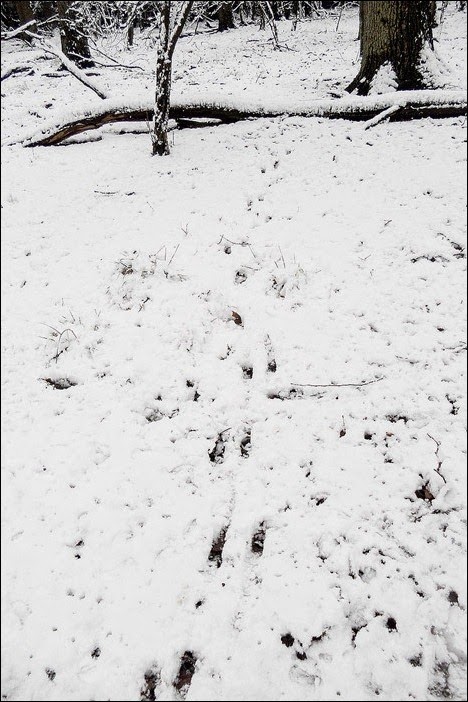 The few tracks I found during the rest of the day were, for the most part, covered up by the latest snow or were being eroded due to the snow melting in the trees causing clumps of snow and ice falling onto the snow.
Subscribe to:
Comments (Atom)


