Showing posts with label Swan. Show all posts

Sunday, 5 November 2017

I Admit it, I'm an Anti Social Photographer!

I think, for those of us who are wildlife or landscape photographers, we each have our own reasons for being so.  For me it’s an interest in wildlife which I’ve had since I was a kid, together with art, something I was always good at, joining up with photography, a subject I took up as an art student at college.  Together, however they make up a third part.  Living and working in a city I find the noise, crowds and even the day to day stupidity and selflessness of people more and more oppressive.

So, going out early in the morning, preferably somewhere remote and quiet, I find relaxing and if you can watch a Fox hunting or a sunrise over the sea, it just makes the moment just that little more special.  Unfortunately it’s hard to avoid people when out and about.  The first below three images were taken in a hide.  Now I normally stay away from these places exactly because they tend to have a lot of people and worst off, photographers.  On this occasion, I was by myself at first but was followed soon after by two photographers who spent most of time talking with intermittent rattling off at full frames per second, at anything that went by. 

Then came in the worst kind of ‘wildlife photographer’.  He was the type who was decked out head to toe in camouflage though clearly never walks more than a hundred or so metres from his car.  He then proceeded to non stop talk about how much gear he had, how many camera’s he had brought over the years, but had to ask ‘how to make the picture on the back screen go bigger’. He later phoned a camera store, hands free so everyone could hear, asking about a Sigma tele lens and talking to the poor woman who answered as if she should have known him personally because he had visited the store before!

Whilst he was doing this and with the other two still talking, a Kingfisher, what they’d seem to be waiting for, landed in front of the hide (below image) for less than a couple of seconds and, possibly scared by the noise, was off.  If everyone had remained quiet they would have heard the call of it before it arrived and maybe managed a picture or so.  With the noise continuing and more people arriving, I left.

I try and avoid other so called, wildlife photographers.  When you go to a hide or even go to online forums and you listen to what they say, they mostly seem to be the same.  They are either gear heads, obsessed with their equipment, the mega pixels, the dynamic range (though often don’t understanding what any of that actually means) or they collect images of wildlife, like a type of modern day stamp collector – the rarer the animal, usually a bird, the better.  Then they will put it up on a forum or Flickr in the hope of fame or adulation. Usually they know or care little for the subject or it’s wellbeing as long as they get the image.  Thankfully, I see little of them out in the actual wilds as that would involve their requiring patience and some skills and knowledge of the subject and with often only a slim chance of success, I’m guessing this would be too much work for most of them.

Images like the below Wagtail was taken at a location I’ve learnt from experience I can find them, but they will normally be spooked by someone nearby, but if you just sit there quietly there’s a chance they will come to you as in this case, a pair of them did, but I was there for nearly an hour.

Landscape photography has it’s own set of problems.  Sunrise is my preferred time but this regularly means lots of dog walkers.  Many of places I go to have restrictions on dogs, such as the location of the two images shot below where, at the time, dogs were not to be using the location or meant to be on a lead.  These were completely ignored.  Not by one or two people but by everyone! So finding a quiet spot without dogs running round you, barking, sniffing your backpack and either the owner shouting at it at the top of their voice or just ignoring what their dog is doing, is nearly impossible.  It also just really spoils a tranquil moment.

And then there’s the dumb questions you get asked.  Your camera is set up on a tripod, it’s sunrise and your pointing the lens towards the sunrise and some bright spark askes what you’re taking a picture of!!  Or ‘are you that photographer who took that picture in the paper’!  And of course there is the ‘that’s a big lens, how close can you get with it’.

So, yes I am an anti social photographer.  I like to get away from people and avoid them when I’m out.  I like the peace and the quietness.  Being out in the woods, waiting patiently for a deer to come by and managing to photograph it without it knowing you were there and achieving an image that might have an technical and artistic merit is a bonus, but if I don’t get anything, that’s ok because I still enjoyed the walk, the exercise and just being out in nature.

Sunday, 17 May 2015

Sunday, 4 May 2014

A mixed bag for a mixed day

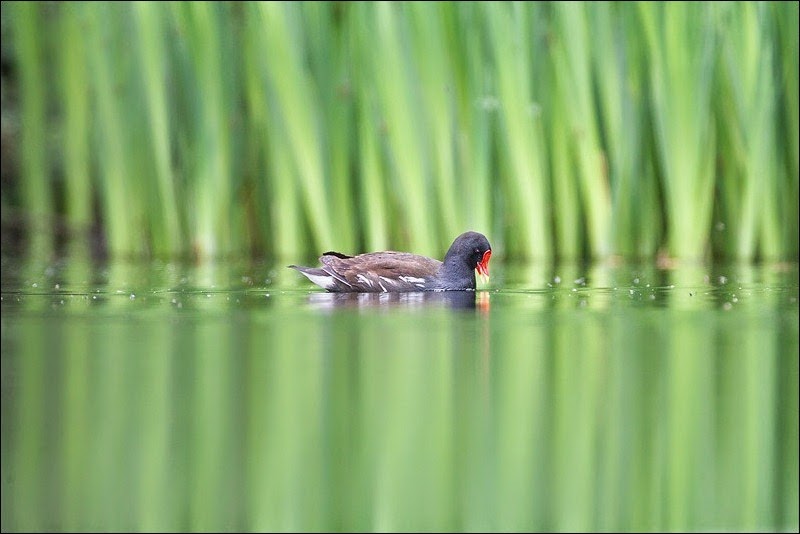
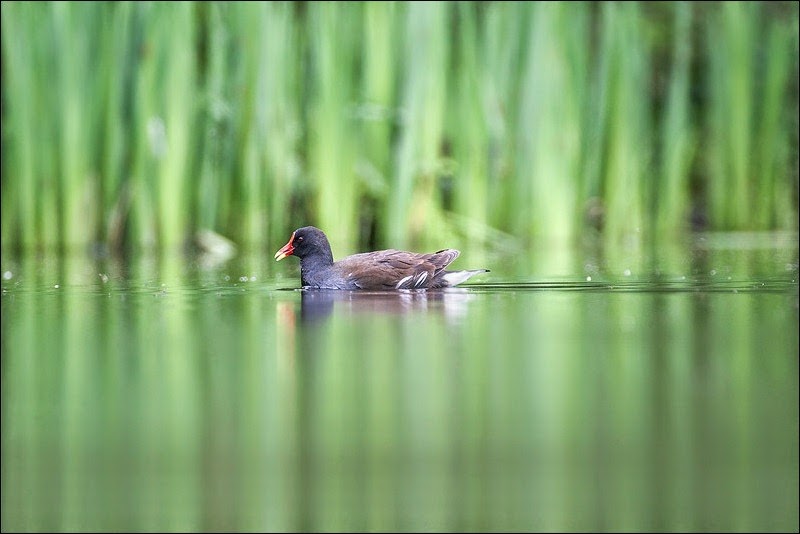
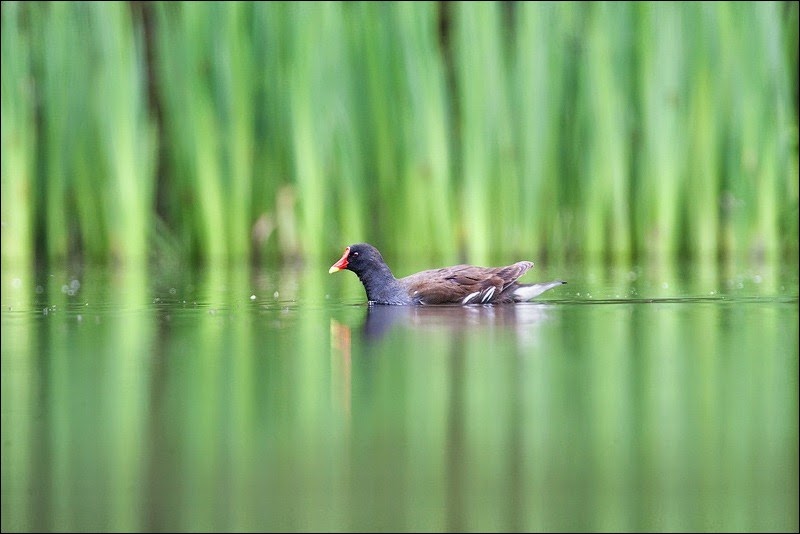
A day that promised lots of sunshine, took up inland along the Tyne this weekend.  Between Newburn and Wylam is an area I will visit between May and August because of the Sand Martins that nest along some of the banks.  There are also a number of ponds dotted around the area, of which one of them I stopped off at.  What caught my eye was the colour and pattern the reeds were creating at the back of parts of this particular pond – a nice backdrop for a picture of a bird I thought.  Only trouble was, it wasn’t exactly a hive of activity and there was only two sections that stood out and had a clear view of, so I decided to get my camera out at a low view point and wait.

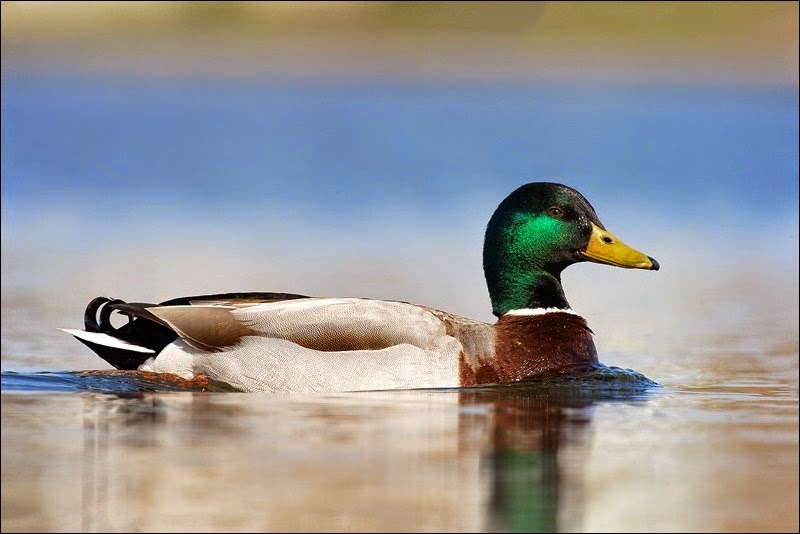
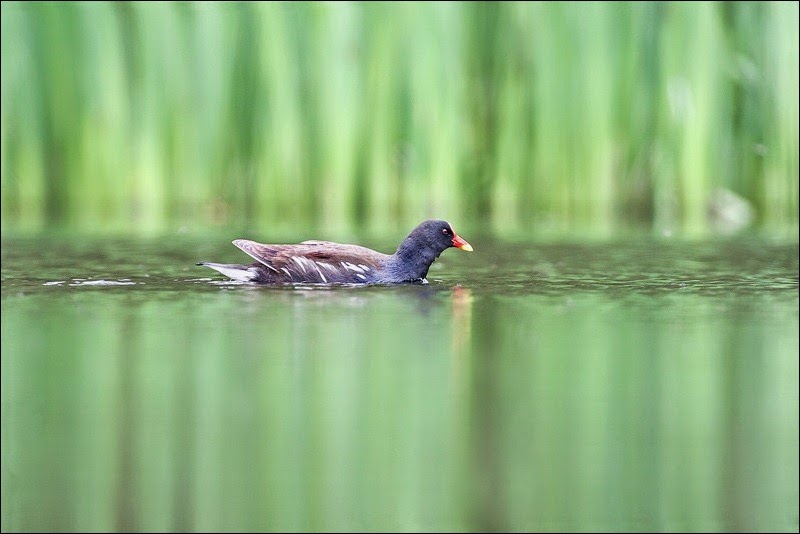
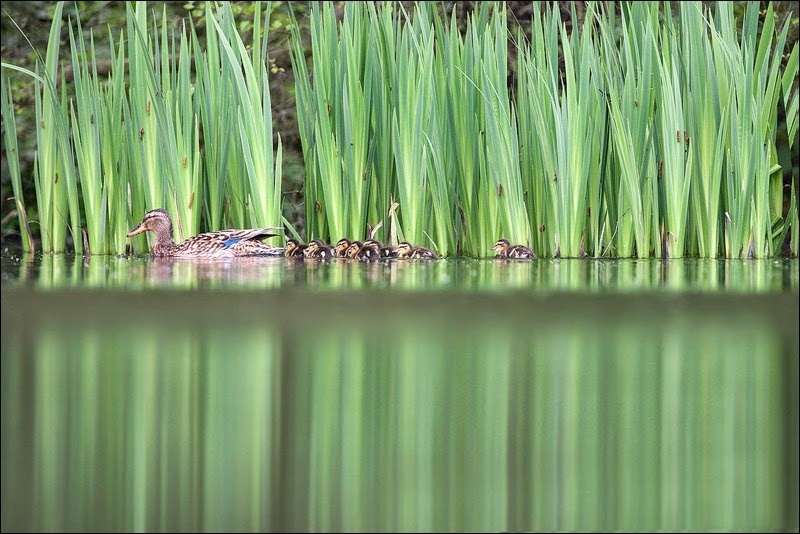
The only obvious birds around were a nesting pair of Swans, two pairs of Moorhens and a Mallard family.  At first, apart from the Swan, the others were wary of my presence and stayed at the far back in the reeds.  After about half an hour, they started to swim around, cautiously at first, but eventually ignoring me.  The only trouble was none were going past either of the two ‘ideal’ locations.  It was an hour before the Moorhens started to go past the furthest of these spots though moving quickly making it difficult to get a good picture, especially due to the very low angle (I was lying down flat) and it was hard to see through the view finder correctly, keep a straight horizon and focus accurately.

Moorhen
 
Moorhen
 
Moorhen
 
Moorhen
 
Moorhen
 
Moorhen

After a while, it became obvious as to why the Moorhens were moving quickly back and forth past this spot, it must have been the territorial boundary between the two pairs of birds and a fight broke out, with eventually all four birds involved.  Unfortunately for me, as had been concentrating on photographing a single bird at distance and had just attached my converter on the lens to give me a bit more reach but a slower focusing speed, a narrower depth of field and slower shutter speed.  The action was over in a flash, sweeping from right to left and with my camera set on a slow frame rate and the other disadvantages, I wasn’t able to get a decent image.

Moorhen
 
Moorhen

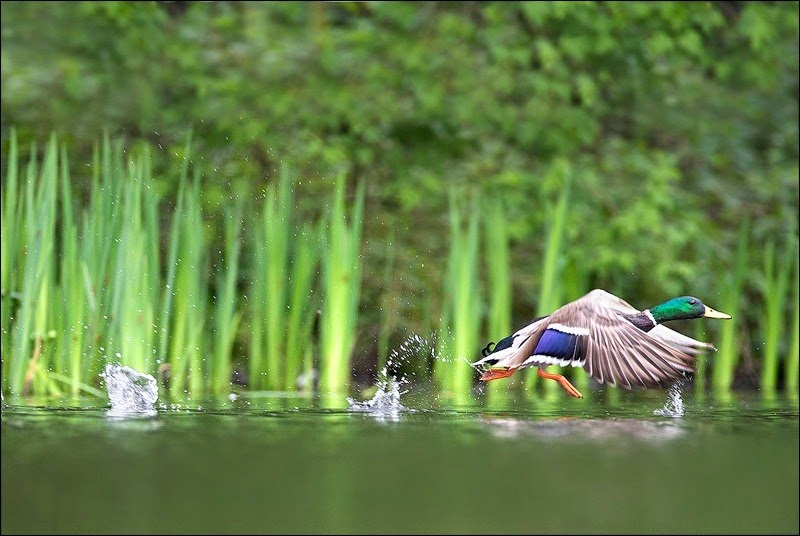
A few minutes later, everything was back to normal,  a Swan swam past as did a Mallard family and the Moorhens had withdrawn to their respective parts of the pond.  By this time I was back down to a bare 500mm lens, which was fortunately as, while positioning the lens on an ideal spot of reed for what I was expecting a Mallard to swim past, instead he took off and all the disadvantages I had previously had with the Moorhens were gone and managed to get a series of decent image of the bird as it went past.

SMP_0193
 
SMP_0160
 
SMP_0322
 
River Tyne

Of course the main purpose of the trip, was to check on the the Sand Martins this year.  I’ve been watching them for a number of years and recently they had moved further up from their previous nest site, but, unfortunately, due to the fewer nesting opportunities there has, correspondently, been fewer Sand Martins.  The image below shows the bank where they used to nest.  It’s changed.  There has been no obvious erosion from the river or from the top, but the bank is not as steep has more of a slope and so grass has managed to get a better hold, making it easier for predators to access the nests within the bank.  Previous examples of my successes here at this same spot (and a predator attack) in the past when the birds were successfully nesting here in large numbers.

There was then today very few Sand Martins compared to others seen at the same spot at the same time of year on this day.  It could still be early and it still seems quite cool, but I’m guessing the nesting area will have moved elsewhere for the most part.

River Tyne
 
River Tyne

Panoramic view point of the same spot

Saturday, 29 December 2012

The Twelve Months of 2012

As 2012 draws to a close and with the new year soon to be upon us, in true tradition I thought I would look back over the year using photographs that didn’t make it into my blog, mostly due to their being slight variations.  Too be honest, 2012 hasn’t been the best of years for me – personally or from a photographic point of view, so I’m not sad to see the back of it.  However, despite my often lacking motivation and it being officially the wettest year on record, there were some moments weather permitting.

January

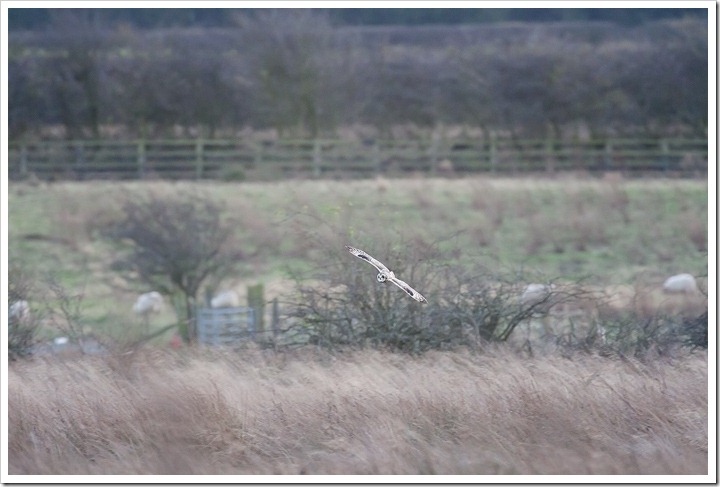
This month carried off where the pervious month ended with lots of sights of wintering Short Eared Owls, although photo opportunities were difficult due to the very poor light and distance, being owls, they are just a great sight to watch hunting.  Unfortunately, probably due to the long periods of rain and flooding of many of the areas they used at the beginning of the year, their numbers have been greatly reduced and more dispersed this time.

SMP_3561

Typical distances experienced.  Taken with a 500mm lens + converter

 
SMP_3878-2

A lucky closer fly by

February


Although this month was milder than the same time the previous year, it still felt very much like winter – damp, dark and miserable and the usual growing activity of wildlife wasn’t there.  Usually a good time to see Roe Deer, I barely saw any never mind having any photographic opportunities.  It wasn’t just the woods that seemed quiet, the lakes, rivers and even beaches seemed devoid of activity.

SMP_4036

The one guaranteed bird you will find on a lake – the trusty Swan

 
SMP_4017

A Wigeon was about the most exotic bird around on this lake

March


March last year was a flurry of activity for me, not to mention an opportunity for one of my favourite photographic subjects – Rabbits.  But where were they? Not a bunny in sight.  Their warrens were abandoned and there were just a few sightings.  There had been plenty of young born the previous year, so what had happened?  Predication?, disease?, human intervention?  I may never know that one, but hopefully a visit this year will see their return.  One positive out of an another quiet month was the sighting of a Red Squirrel in a Tyneside Wood where they’re otherwise become extinct due in no small part by the Grey Squirrels push north.

SMP_4090-2

Typical, quiet woodland scene for this month – still little sight of Roe Deer

April


Definitely a slow month with the weather changing little from the previous two months and temperatures rarely getting into double figures.  Again, normally my calendar would be taken up with photographing Roe Deer and the arrival of young Rabbits but the only mammal to cross my lens in this month was a Rat which came by as I waited in anticipation of photographing Foxes!

SMP_3842

Brown Rat making an appearance whilst I quietly waited for bigger quarry

May


May was finally showing signs that nature was waking up despite the damp weather.  Courting birds, Dippers feeding their early fledglings and Grey Squirrels chasing away rivals.  This year I’d hoped to finally break my ‘duck’ and photograph Fox cubs, but a den found the previous year had been abandoned and Foxes seemed much more scarcer this year possibly linked to one of the main prey, Rabbits, also being rarer.

SMP_4286

Inquisitive Grey Squirrel tempted my some of my pack lunch

June


Normally a bad time for wildlife with dawn arriving very early in the morning and dusk late at night, foliage hiding birds and mammals alike and any venturing out into many areas results in being sucked dry by mosquitoes.  However, it has now become the one time of year I look forward to and plan so that I can visit the Farne Island, timing it for just the end of June when the Puffins are madly feeding their chicks.  This year, the weather on the day was perfect and, despite the concerns on the islands that the wet weather would flood their nests, I was able to fill up a few cards with plenty of images as they seemed to have weathered..well, the weather. Though I was not able to, I keep hoping to get iconic image showing a close up of a Puffin with Sand Eels in its beak.  A tricky shot due to the problem that as quick as they land, they get ‘mugged’ by waiting gulls, so their landing is usually a case of flying straight into their dens and crash landing at the entrance.

Definitely the highlight of my year and a recommendation for anybody who can visit a Puffin colony.

SMP_4575

Having a good scratch outside its nesting burrow

 
SMP_4701-2

Off out to sea

 
SMP_4744
 
SMP_4750

Landing back at the nest without a catch

July


Recently, I’ve tended to have a calendar of events for certain times of the year, and in July I visit the Sand Martins along the banks of the River Tyne.  However, they tend to change their nest locations each year by moving a hundred yards or so up or down from the previous year.  This years location was not good from a photographic point of view as I couldn’t get a decent view point as I had managed in previous years.  Another nesting area is the gull colonies which make for a great opportunity to practice birds in flight camera techniques.

SMP_4846

About the best views I managed of Sand Martins this year

 
SMP_5266

A Gull nesting precariously on a cliff ledge

August


The lack of anything in August was more down to my motivation and dealing with personal problems and with the little time spent out, little success came of it.  I’d still hoped for some success with Foxes and Roe Deer but both remained elusive.

SMP_5776

A very brief encounter with a Roe buck

September


September, normally I time for landscaping opportunities, unfortunately continued for me where August left off so there was a large gap in my blogs during this part of the year.

SMP_6144

Autumn look

October


I made a concretive effort to get out in October, despite my morale being low.  This month brings its own opportunities as dawn is becoming later as to make it easier to get up and be on location by sunrise and it can still be reasonably mild at that time.  This makes it an ideal time for taking landscapes and a time of year I often take my camera, tripod and filters down to the coast.  Timing ideal conditions – weather, tides, etc, can be difficult and what should have been a partly cloudy start to the day and with a sunrise through broken clouds turned out to be completely overcast and foggy.  I wasn’t unhappy with this as it gives other photographic opportunities though not so much for the shoreline waders as it was simply too dull to take decent images.

SMP_5845

The blue cast given by an early, foggy and overcast morning just before sunrise

 
SMP_5944

A flock of waders flying through the dim, misty morning

 
SMP_6066

Just before the fog lifted gave a different image opportunity of the much photographed St Marys Lighthouse

November


As part of my calendar at this time of year, my hopes are of photographing Kingfishers by areas of waters such as lakes or large ponds – better than the dark light of rivers.  Any earlier and the water is full of plant life or fallen leaves.  Any later and the water may be frozen or the Kingfishers have moved to wintering grounds.  Its one of the few times I will use a public hide, partly because I like the challenge and freedom of photographing wildlife ‘out in the field’ but also I prefer peace and quiet and my experience of many people who use the hides are of other photographers who have no patience, etiquette or genuine interest in the wildlife.  They simply drive straight to the hide dressed head to toe in camouflage and set their camera to as many frames per second they can squeeze out of their camera whilst talking to each other loudly and constantly. 

Anyway, one such visit didn’t have any success photographically though a Kingfisher was sighted but stayed in the distance much to the annoyance of two of the said photographers who seemed to be taking it very personally.  I was tempted to tell them that the areas the Kingfishers were perched was where they could fish because the water was free of fallen leaves – the areas closer to the hide were not.

Later that month success was had in open an clearing in woodland with a visit of a Woodpecker and in perfect conditions.  Normally I see them in dark areas of woodland, but this time I got lucky.  I also got lucky with a few more glimpses of Roe Deer which had been eluding me all year – one planned and one by chance.

SMP_6263

Moorhen on a ‘Kingfisher perch’

 
SMP_6453

An opportunity too good to miss with this woodpecker

 
SMP_6681

Unusual sight of a Roe Deer in the middle of the day by a busy lane

December


Spurred on by the success of the previous month, I decided to head to Northumberland in the hope to see Red Squirrels, somewhere in the north east they can still be found in reasonable numbers.  After placing some food down and waiting quietly, it wasn’t long before the first arrival and I ended up spending the morning watching the single individual who seemed as curious of me as I was interested in it. 

In-between the exceptional wet spell we’ve had, I tried another sunrise photo session but this turned out brief due to condition of all four batteries of my recently unused 5D, despite seeming ok the night before after charging them.  For my last outing of the year, I guess that and the current poor weather conditions sums up 2012.

SMP_7134

Red Squirrel checking me out

 
IMG_9900

Taken minutes before the camera batteries packed in