Showing posts with label Kingfisher. Show all posts

Sunday, 5 November 2017

I Admit it, I'm an Anti Social Photographer!

I think, for those of us who are wildlife or landscape photographers, we each have our own reasons for being so.  For me it’s an interest in wildlife which I’ve had since I was a kid, together with art, something I was always good at, joining up with photography, a subject I took up as an art student at college.  Together, however they make up a third part.  Living and working in a city I find the noise, crowds and even the day to day stupidity and selflessness of people more and more oppressive.

So, going out early in the morning, preferably somewhere remote and quiet, I find relaxing and if you can watch a Fox hunting or a sunrise over the sea, it just makes the moment just that little more special.  Unfortunately it’s hard to avoid people when out and about.  The first below three images were taken in a hide.  Now I normally stay away from these places exactly because they tend to have a lot of people and worst off, photographers.  On this occasion, I was by myself at first but was followed soon after by two photographers who spent most of time talking with intermittent rattling off at full frames per second, at anything that went by. 

Then came in the worst kind of ‘wildlife photographer’.  He was the type who was decked out head to toe in camouflage though clearly never walks more than a hundred or so metres from his car.  He then proceeded to non stop talk about how much gear he had, how many camera’s he had brought over the years, but had to ask ‘how to make the picture on the back screen go bigger’. He later phoned a camera store, hands free so everyone could hear, asking about a Sigma tele lens and talking to the poor woman who answered as if she should have known him personally because he had visited the store before!

Whilst he was doing this and with the other two still talking, a Kingfisher, what they’d seem to be waiting for, landed in front of the hide (below image) for less than a couple of seconds and, possibly scared by the noise, was off.  If everyone had remained quiet they would have heard the call of it before it arrived and maybe managed a picture or so.  With the noise continuing and more people arriving, I left.

I try and avoid other so called, wildlife photographers.  When you go to a hide or even go to online forums and you listen to what they say, they mostly seem to be the same.  They are either gear heads, obsessed with their equipment, the mega pixels, the dynamic range (though often don’t understanding what any of that actually means) or they collect images of wildlife, like a type of modern day stamp collector – the rarer the animal, usually a bird, the better.  Then they will put it up on a forum or Flickr in the hope of fame or adulation. Usually they know or care little for the subject or it’s wellbeing as long as they get the image.  Thankfully, I see little of them out in the actual wilds as that would involve their requiring patience and some skills and knowledge of the subject and with often only a slim chance of success, I’m guessing this would be too much work for most of them.

Images like the below Wagtail was taken at a location I’ve learnt from experience I can find them, but they will normally be spooked by someone nearby, but if you just sit there quietly there’s a chance they will come to you as in this case, a pair of them did, but I was there for nearly an hour.

Landscape photography has it’s own set of problems.  Sunrise is my preferred time but this regularly means lots of dog walkers.  Many of places I go to have restrictions on dogs, such as the location of the two images shot below where, at the time, dogs were not to be using the location or meant to be on a lead.  These were completely ignored.  Not by one or two people but by everyone! So finding a quiet spot without dogs running round you, barking, sniffing your backpack and either the owner shouting at it at the top of their voice or just ignoring what their dog is doing, is nearly impossible.  It also just really spoils a tranquil moment.

And then there’s the dumb questions you get asked.  Your camera is set up on a tripod, it’s sunrise and your pointing the lens towards the sunrise and some bright spark askes what you’re taking a picture of!!  Or ‘are you that photographer who took that picture in the paper’!  And of course there is the ‘that’s a big lens, how close can you get with it’.

So, yes I am an anti social photographer.  I like to get away from people and avoid them when I’m out.  I like the peace and the quietness.  Being out in the woods, waiting patiently for a deer to come by and managing to photograph it without it knowing you were there and achieving an image that might have an technical and artistic merit is a bonus, but if I don’t get anything, that’s ok because I still enjoyed the walk, the exercise and just being out in nature.

Wednesday, 5 July 2017

Kingfishers

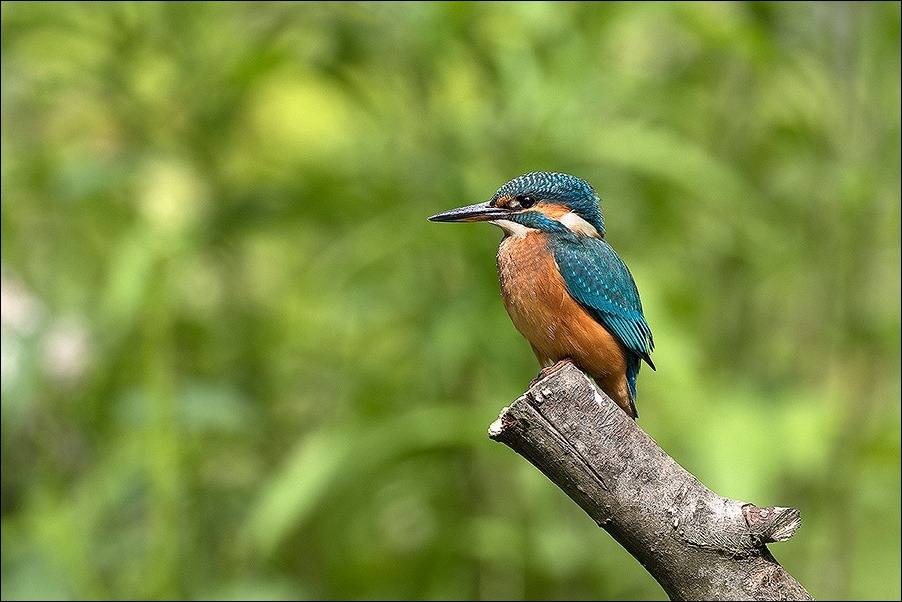
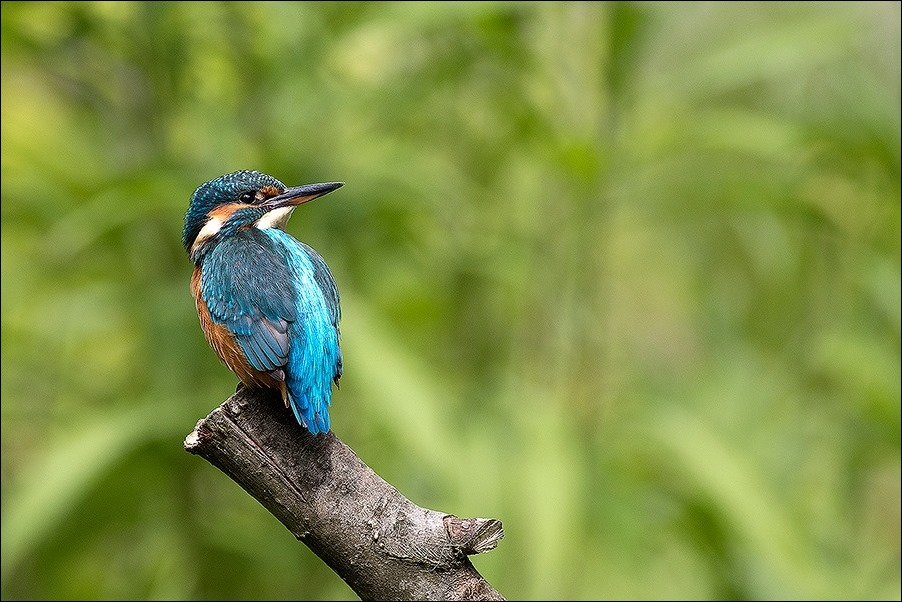
It’s been a while since I’ve really managed to photograph Kingfishers and four years since I blogged a post showing them.  They can be very elusive but one of my favourite birds to watch and take images of.  After a couple of unsuccessful attempts during the last few weeks, I finally got lucky with the best of images I managed, below.

Kingfisher

Kingfisher

Kingfisher

Kingfisher

Kingfisher

Kingfisher

Sunday, 6 July 2014

Changing years & Changing fortunes

In the relatively short time I have been photographing wildlife, I have seen many changes particularly in the changing fortunes of the wildlife – I don’t think many of us think about the animals around us and their daily struggle for survival and our impact on them.

With every new year, as well as looking for new places interest, I have a dozen or so locations of which I have regularly visited and it is at these areas I find that rarely is one year the same as the previous in what I will see.  The reasons no doubt vary – changing habitat, disturbance, disease, seasonal changes in the weather or just a natural changing balance of nature.  From a photographic point of view it means no guarantees on what I can shoot on a yearly basis and so take advantage of any unusual influx or increased population of an animal.

The below choice is not exclusive or necessary typical nation wide, rather from my own experiences of the animals I have or would usually see or seek out.


GREEN-ARROW-UP

On the way up

Grey Squirrel

No more obvious of the changing fortunes is the Grey Squirrel.  Nine years ago when I started back into photography shooting wildlife, the Grey was in the process of finishing off taking over the Native Red Squirrel in this area.  The woods where I once used to watch the Reds chasing each other around the trees were now replaced by these foreign invaders and have grown in numbers.  Of all the mammals around this area this is the easiest to find and see.  So, although on the way up in numbers, it’s probably not the most popular success story by most.

IMG_04346
 

Red Kite

When I was growing up, the Red Kite was very rare.  My trusty old ‘Birds of Britain and Europe’ book had them living in only a small area of Wales.  Once very common, it was almost wiped out through persecution by the 20th century.  In 1989 around the Gateshead area of North East England it was reintroduced (as it was elsewhere in the country) with great success.  Now, in this area at least, it is the most seen bird of prey and one of my favourites and I never cease to be impressed with the sight and sound of this bird.  During the winter months they communally roost so you can see a dozen or more in any one area.

IMG_21226
 

The Buzzard

The Buzzard, like the Kite, was also persecuted but, unlike the Kite they survived and as laws have been brought in to give birds like this some protection, this bird of prey has managed to not only survive but become what is now the most common bird of prey in the UK.  As with the Kite, it was only a short time ago that I first saw one of these birds and it is also a sight to watch one gliding overhead.

IMG_14736


arrows_back_forward

No change

Roe Deer

At first I never saw one of these.  They would have been around but I didn’t have the knowledge or experience of finding them.  I’m sure during the nine year period I’m including in this post, the Roe Deer has probably increase in numbers but it’s not something I have particularly noticed.  Even if you don’t see one due to their timid nature, the signs are all around that they are here and again, an animal I just love to watch.

IMG_07306
 

Kingfisher

Purely from my experience of this bird over recent years I have it in this section though it could belong ‘Fluctuating’ below because it is very susceptible to a bad winter of which we have had a few, but their numbers seem to bounce back.  What I have found is that there doesn’t seem to be a yearly regular spot I can go to see them and even where I can, this will change on a month to month basis.  Perhaps my favourite birds to watch and photograph.

SMP_46945
 

Heron

Definitely a consistent regular.  Anywhere it seems where there is water there’s a Heron – Lakes, ponds, rivers or the coast, more than not you will see one.  A photogenic bird and one that will often conveniently keep still for you although it doesn’t like you getting to close to you.  It has it’s comfort zone and you can be very visible outside of that and it will ignore you, but step inside of it and off it goes.

IMG_07766


arrows_green_red (1)

Fluctuating

Fox

By fluctuating, I mean that these animals have been sighted by me in regular numbers for a while then gone through a lull then picked up again, though I’m sure this would be localised.  The Fox some six years ago, I was practically ‘tripping over’ them wherever I went.  There were places I could go were I would almost be guaranteed to see them and could do so in the middle of the day.  Then they were gone.  Since Fox hunting was rightly banned, it’s meant you can actually see this animal in daylight and is my favourite mammal to do so.  There is something about having one look right at you – almost wolf like with those eyes – and I’ve had numerous close encounters with them that has given me that special connection with nature, which reminds me why it is I like to spend so much time out in the wilds.

IMG_22836
 

Rabbit

I’m sure the Rabbits and Foxes lives are intertwined in their numbers.  Rabbits will go through periods where their numbers are very numerous then they will go into decline and alongside this, the number of Foxes will correspond with this since they prey upon them.  I think due to their ability to multiply however, Rabbits can gain their population much quicker.

IMG_32446
 

Sand Martin

I’ve seen Sand Martins every year but their numbers seem to vary on their ability to find suitable nesting areas and in recent years, at least the areas I visit, these have been fewer in number.  In the two most noticeable areas that I usually visit, the sand banks have either collapsed or more eroded making it easier for predators to get to the nests within the banks.

TBP_51926
 

Short Eared Owl

This is an owl that’s largely a winter visitor and their visiting numbers will greatly depend on the severity and type of the winter otherwise they will stay either further north or south.  Three to four years ago, they were found in large numbers a a number of locations, the past winter they were far fewer to be seen.  There numbers also depend on the prey around so a good year for voles and mice will help keep the numbers up.

SMP_34766


arrows_green_red

On the way down

Kestrel

When I was growing up the Kestrel was the most common bird of prey in the UK and one I would regularly see – the hovering Kestrel is a very distinctive sight, in fact, apart from an Osprey I saw on a family holiday in Scotland, I had seen no other bird of prey until many years later.  In the last year I’ve had four sightings of them, I previously could almost guarantee to see one when I went out, but not now.  Hopefully it’s not a permanent change of fortunes for the Kestrel as I’ve always enjoyed watching this bird hunt and it would be a great loss.

IMG_29576
 

Red Squirrel

As obvious as the Grey Squirrels rise in fortunes, so has been the Reds demise.  It didn’t seem that long ago that these idyllic little animals where the only squirrel around and very common.  Along with the Fox they have been my favourite animal to watch, with their pluckiness and curiosity you can’t help but love them and they are so much better looking than the Grey – their ultimate reason for their quickly vanishing from our woodlands.  Unfortunately, I haven’t seen one in two years and unlikely, at least in this area, that I'll see one again!  They still have a refuge further up in Northumberland and hope to spend some time later photographing them their before they disappear from there too.

IMG_32966
 

Puffin

Despite seeing them in as apparent large numbers as usual whenever I’ve visit the local Farne Islands, they are on the decrease, they say due to the seas warming and so the loss of their main diet of Sand Eels.  If this is the case, much like the two animals above, it would be a huge loss.  As with those two, the Puffin is a great animal to watch and like the Red Squirrel, seems to have it’s own special character.

392X0102


I’ve added two other animals under no particular grouping, the Otter and Sparrowhawk.  Technically both are supposed to be thriving though I rarely see either.  The Otter is a success story, once very rare due to the pollution of the rivers in this country, now that they are much cleaner they are now found all over the country, even in the local Tyne River, once extremely polluted due to the shipping industry.  Apparently they can be found under the city lights themselves, but being nocturnal, are seldom seen unless you’re lucky.

My typical sight of a Sparrowhawk is seeing shoot past in a wood as it chases its prey or I’ve disturbed it just after making its kill.  Their signs of a kill are common – just a load of feathers of a pigeon which it would have then taken off with.  To get a photograph of one is even rarer than seeing it due to living in the woodland and rarely keeping still or out in the open.

Again, this is just a few of the most noticeable animals in recent years and there are others such as Barn Owls which I haven’t seen for a while and woodpeckers both Green and Great Spotted which I see and hear more often.  I wonder what differences the next ten years will see.

IMG_22006
 
img_05112

Saturday, 7 June 2014

At this time of year… past and present

I find it interesting to look back at previous years at the same time, to see what was about and what I was photographing at any one particular time.  It’s not only a record of what is about at any particular time of year, but how much as time goes by, nature changes as does my own ability to photograph it.  Every now and then I like to go back through my photographs and delete older ones as I improve, though I still like to keep some of the older ones just as a record of the past.  This collection goes back to 2006 when I moved into digital photography and I’ve tried to put together a couple of images from each of those past years at the same time of the year.

At the beginning of June should be a busy time – life is in full swing with animals bringing up offspring and plants in full growth – but I was surprised to find it hasn’t always the most productive time for me.


Present

Most activity, as expected, seems to involve parents bringing up their young, birds sing loudly proclaiming their territory and insects are everywhere. Some of the images I achieved last year couldn’t be replicated.  It wasn’t as simple as going to the same place around the same time and see the same bird or animal performing the same behaviour and just goes to show nature is constantly changing.

SMP_2468-2
SMP_2679
SMP_3352-2
SMP_3354
SMP_3656

2013

Much the same as this year and, although my 500mm lens was being repaired, I don’t think it meant any missed opportunities as it seemed quite quiet considered the expected activity around.  The Reed Bunting encounter was perfect for me as I was able to get close without it being to bothered by my presence.  Mallards and Geese were a plenty with their young and again very approachable with just a 400mm lens.

SMP_2617
SMP_2469

2012

I could find very little in the way of photographs taken this year, probably more down to my ability to get out as anything.  Warblers were the theme of the day.

SMP_4544

2011

Skylarks were in their numbers in the same place where today, they’ve been replaced by Reed Buntings.  Same activity though, busy feeding their young.  New camera this year – the Canon Mark III

392X0260-2
SMP_0528

2010

The locations where I saw the birds in 2010, no longer have them in the same numbers or in the case of the Coots, they have gone completely due to dog owner irresponsibility at the small lake.  The Sand Martins are there but in much smaller numbers, more down to the naturally changing landscapes of their nesting sites where the sand banks have eroded making a less than ideal nesting location.  New lens this year, the Sigma 500mm taking over most of my wildlife photography though the Canon 400mm was still getting used as shown by the Sand Martin image below.

TBP_5407
TBP_4982

2009

Not sure what happened this year, but I couldn’t find any images at all for June so just a Kingfisher from the following month.  This year also saw my taking the plunge into getting a ‘professional’ camera, the Canon Mk IIn.  This felt so much better to use than the 30D I was using and image quality also seemed an improvement.

TBP_0451

2008

Another slow time of year for 2008 and very few images to show for it, in fact this is the only wildlife one I could find.

IMG_6043

2007

To big steps in my photography this year.  The purchase of the 30D but mostly by getting the Canon 500mm f5.6.  What a difference that made both quality of images but also being able to get much closer to the wildlife, though the somewhat fierce looking Fox below was an exception in achieving that!  I also replaced the kit lens with the Canon 17-40 mm lens also making a big difference to my landscapes.

IMG_3233
IMG_3250

2006

My reintroduction into photography and in this case, digital was through a Canon 350D, a Tamron 70-300mm lens and the standard ‘kit lens’.  The Tamron lens was awful – very slow and soft, the kit lens was ok but you had to use it in the right way, but I loved the 350D.  It gave me a love of photography all over again.  Prior to this my camera kit consisted of a couple of Olympus cameras and a statement of lenses, the longest being a 300mm mirror lens -  not recommended for wildlife unless you live in a very sunny place!

IMG_0828
IMG_0844-2

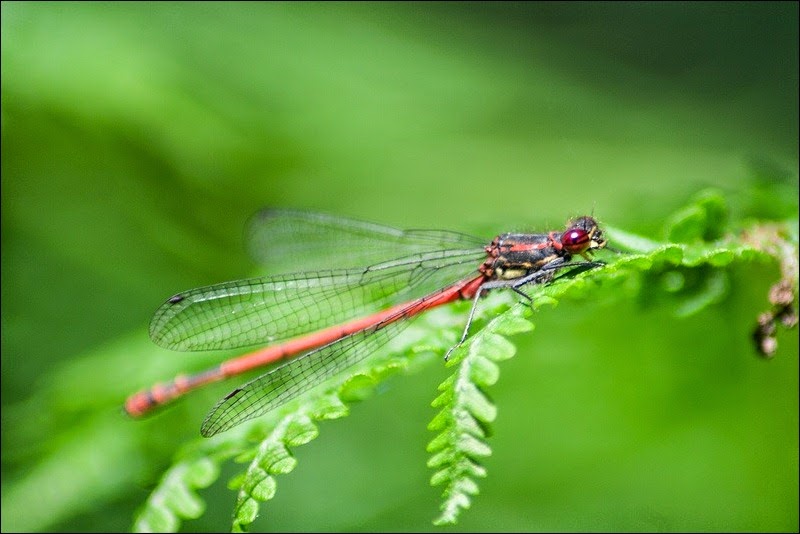
I like to think during these years, my photography has improved as certainly my knowledge of wildlife and nature has.  I feel my photography has had an impact too through various introductions – a professional body camera, the 400mm then 500mm lens. Also interesting to see the Damselflies differences.  The one taken in 2006 using the Tamron zoom and very soft in quality and the most recently taken one using the Sigma 105mm lens, technically much better.