Showing posts with label Buzzard. Show all posts

Sunday, 6 July 2014

Changing years & Changing fortunes

In the relatively short time I have been photographing wildlife, I have seen many changes particularly in the changing fortunes of the wildlife – I don’t think many of us think about the animals around us and their daily struggle for survival and our impact on them.

With every new year, as well as looking for new places interest, I have a dozen or so locations of which I have regularly visited and it is at these areas I find that rarely is one year the same as the previous in what I will see.  The reasons no doubt vary – changing habitat, disturbance, disease, seasonal changes in the weather or just a natural changing balance of nature.  From a photographic point of view it means no guarantees on what I can shoot on a yearly basis and so take advantage of any unusual influx or increased population of an animal.

The below choice is not exclusive or necessary typical nation wide, rather from my own experiences of the animals I have or would usually see or seek out.


GREEN-ARROW-UP

On the way up

Grey Squirrel

No more obvious of the changing fortunes is the Grey Squirrel.  Nine years ago when I started back into photography shooting wildlife, the Grey was in the process of finishing off taking over the Native Red Squirrel in this area.  The woods where I once used to watch the Reds chasing each other around the trees were now replaced by these foreign invaders and have grown in numbers.  Of all the mammals around this area this is the easiest to find and see.  So, although on the way up in numbers, it’s probably not the most popular success story by most.

IMG_04346
 

Red Kite

When I was growing up, the Red Kite was very rare.  My trusty old ‘Birds of Britain and Europe’ book had them living in only a small area of Wales.  Once very common, it was almost wiped out through persecution by the 20th century.  In 1989 around the Gateshead area of North East England it was reintroduced (as it was elsewhere in the country) with great success.  Now, in this area at least, it is the most seen bird of prey and one of my favourites and I never cease to be impressed with the sight and sound of this bird.  During the winter months they communally roost so you can see a dozen or more in any one area.

IMG_21226
 

The Buzzard

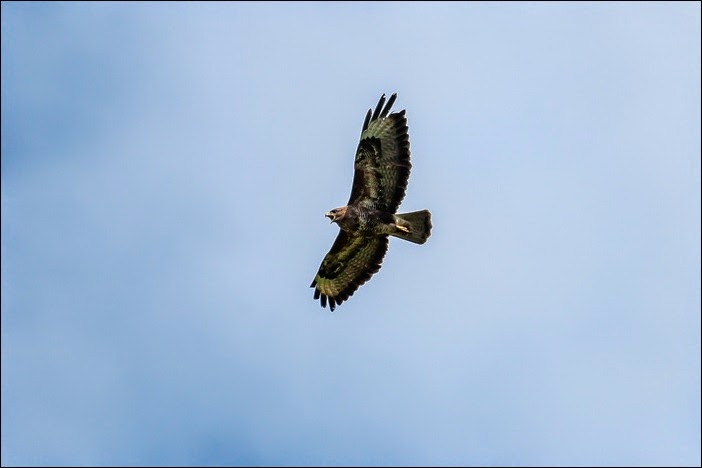
The Buzzard, like the Kite, was also persecuted but, unlike the Kite they survived and as laws have been brought in to give birds like this some protection, this bird of prey has managed to not only survive but become what is now the most common bird of prey in the UK.  As with the Kite, it was only a short time ago that I first saw one of these birds and it is also a sight to watch one gliding overhead.

IMG_14736


arrows_back_forward

No change

Roe Deer

At first I never saw one of these.  They would have been around but I didn’t have the knowledge or experience of finding them.  I’m sure during the nine year period I’m including in this post, the Roe Deer has probably increase in numbers but it’s not something I have particularly noticed.  Even if you don’t see one due to their timid nature, the signs are all around that they are here and again, an animal I just love to watch.

IMG_07306
 

Kingfisher

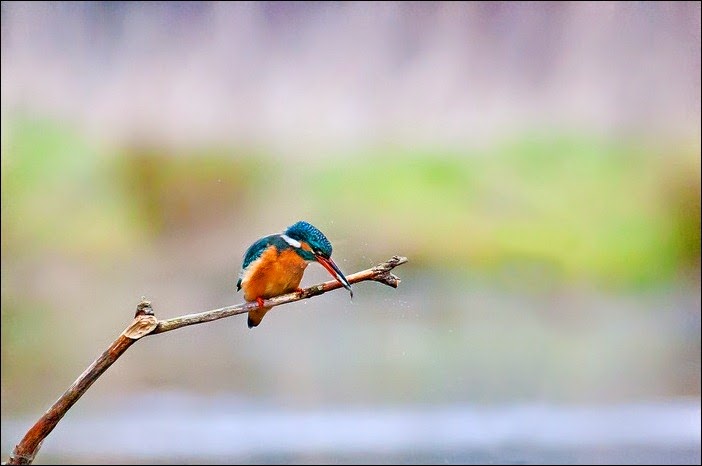
Purely from my experience of this bird over recent years I have it in this section though it could belong ‘Fluctuating’ below because it is very susceptible to a bad winter of which we have had a few, but their numbers seem to bounce back.  What I have found is that there doesn’t seem to be a yearly regular spot I can go to see them and even where I can, this will change on a month to month basis.  Perhaps my favourite birds to watch and photograph.

SMP_46945
 

Heron

Definitely a consistent regular.  Anywhere it seems where there is water there’s a Heron – Lakes, ponds, rivers or the coast, more than not you will see one.  A photogenic bird and one that will often conveniently keep still for you although it doesn’t like you getting to close to you.  It has it’s comfort zone and you can be very visible outside of that and it will ignore you, but step inside of it and off it goes.

IMG_07766


arrows_green_red (1)

Fluctuating

Fox

By fluctuating, I mean that these animals have been sighted by me in regular numbers for a while then gone through a lull then picked up again, though I’m sure this would be localised.  The Fox some six years ago, I was practically ‘tripping over’ them wherever I went.  There were places I could go were I would almost be guaranteed to see them and could do so in the middle of the day.  Then they were gone.  Since Fox hunting was rightly banned, it’s meant you can actually see this animal in daylight and is my favourite mammal to do so.  There is something about having one look right at you – almost wolf like with those eyes – and I’ve had numerous close encounters with them that has given me that special connection with nature, which reminds me why it is I like to spend so much time out in the wilds.

IMG_22836
 

Rabbit

I’m sure the Rabbits and Foxes lives are intertwined in their numbers.  Rabbits will go through periods where their numbers are very numerous then they will go into decline and alongside this, the number of Foxes will correspond with this since they prey upon them.  I think due to their ability to multiply however, Rabbits can gain their population much quicker.

IMG_32446
 

Sand Martin

I’ve seen Sand Martins every year but their numbers seem to vary on their ability to find suitable nesting areas and in recent years, at least the areas I visit, these have been fewer in number.  In the two most noticeable areas that I usually visit, the sand banks have either collapsed or more eroded making it easier for predators to get to the nests within the banks.

TBP_51926
 

Short Eared Owl

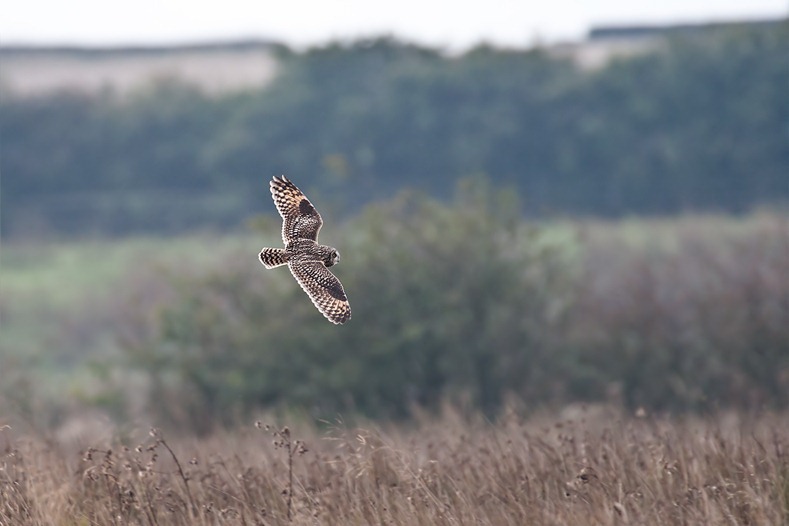
This is an owl that’s largely a winter visitor and their visiting numbers will greatly depend on the severity and type of the winter otherwise they will stay either further north or south.  Three to four years ago, they were found in large numbers a a number of locations, the past winter they were far fewer to be seen.  There numbers also depend on the prey around so a good year for voles and mice will help keep the numbers up.

SMP_34766


arrows_green_red

On the way down

Kestrel

When I was growing up the Kestrel was the most common bird of prey in the UK and one I would regularly see – the hovering Kestrel is a very distinctive sight, in fact, apart from an Osprey I saw on a family holiday in Scotland, I had seen no other bird of prey until many years later.  In the last year I’ve had four sightings of them, I previously could almost guarantee to see one when I went out, but not now.  Hopefully it’s not a permanent change of fortunes for the Kestrel as I’ve always enjoyed watching this bird hunt and it would be a great loss.

IMG_29576
 

Red Squirrel

As obvious as the Grey Squirrels rise in fortunes, so has been the Reds demise.  It didn’t seem that long ago that these idyllic little animals where the only squirrel around and very common.  Along with the Fox they have been my favourite animal to watch, with their pluckiness and curiosity you can’t help but love them and they are so much better looking than the Grey – their ultimate reason for their quickly vanishing from our woodlands.  Unfortunately, I haven’t seen one in two years and unlikely, at least in this area, that I'll see one again!  They still have a refuge further up in Northumberland and hope to spend some time later photographing them their before they disappear from there too.

IMG_32966
 

Puffin

Despite seeing them in as apparent large numbers as usual whenever I’ve visit the local Farne Islands, they are on the decrease, they say due to the seas warming and so the loss of their main diet of Sand Eels.  If this is the case, much like the two animals above, it would be a huge loss.  As with those two, the Puffin is a great animal to watch and like the Red Squirrel, seems to have it’s own special character.

392X0102


I’ve added two other animals under no particular grouping, the Otter and Sparrowhawk.  Technically both are supposed to be thriving though I rarely see either.  The Otter is a success story, once very rare due to the pollution of the rivers in this country, now that they are much cleaner they are now found all over the country, even in the local Tyne River, once extremely polluted due to the shipping industry.  Apparently they can be found under the city lights themselves, but being nocturnal, are seldom seen unless you’re lucky.

My typical sight of a Sparrowhawk is seeing shoot past in a wood as it chases its prey or I’ve disturbed it just after making its kill.  Their signs of a kill are common – just a load of feathers of a pigeon which it would have then taken off with.  To get a photograph of one is even rarer than seeing it due to living in the woodland and rarely keeping still or out in the open.

Again, this is just a few of the most noticeable animals in recent years and there are others such as Barn Owls which I haven’t seen for a while and woodpeckers both Green and Great Spotted which I see and hear more often.  I wonder what differences the next ten years will see.

IMG_22006
 
img_05112

Sunday, 6 January 2013

First Encounters

Over recent weeks the weather’s been rotten, and although this weekend saw an improvement, I was feeling a bit rough, so I’ve been continuing to go through my older images, getting rid of those I now believe to be rubbish, but re-looking at others that, due to improvements in both software and my own abilities, have managed to better ‘salvage’.  I’ve already shown some in a previous post 'Blast from the past' .  After deleting what must be nearly a quarter of those I’ve looked at so far, I’ve also come across a couple of dozen I’ve re processed with various degrees of success. 

As these were early images they were also some of my first encounters with certain wildlife and so I’ve added four of those animals here – Kingfisher, Otter, Fox and Buzzard.


Kingfisher

Although I had seen Kingfishers before, they were always just flashes as they streaked past down a river.  This was the first time I could really watch and photograph them.  One of the reasons I left these photographs alone for so long is because on the day the weather was wet, overcast and dull, I was still re-learning my photography as well as the camera and lens that were new to me.  All three images were taken with the Canon 30D at between 800 and 3200 ISO, a 400mm lens with converter and at 1/800th.  The original RAW images were under exposed which meant even more noise.  Although the first two are still not great, the final of the third turned out much better and one that could certainly be used as a print.

This encounter certainly started my love affair with the Kingfisher as it’s not just a lovely colourful bird but just great to watch fish.

IMG_1598
IMG_1605
IMG_1705
 

Otter

It wasn’t that long ago that seeing an Otter, certainly in this part of the country, would have been rare if not impossible, but since the ban on hunting them and the waterways in this country being much cleaner and without all the pollution of the sixties and seventies, they have become much more common though, due to being largely nocturnal, still hard to see during the day. 

This was the first and best encounter of about a dozen I’ve been lucky to have with them.  Although I took a number of shots of them, the images were distant and overexposed and, although I’ve salvaged something from them, they are not exactly wall hangers but good enough for viewing on the web.  On this occasion, it was good just to watch this mother and her two cubs and gave me my first understanding on how best to recognise an Otter presence on a lake by the gulls following them overhead.

IMG_2200
IMG_2202
IMG_2205
 

Fox

Strictly speaking this was not my first encounter with a Fox, having heard one once at night and anyone who has heard a Fox scream will know how creepy that will have felt in the dark.  This was my first visual sight of one having never seeing one growing up as a child, maybe because of the wide hunting and persecution of them in those days. 

Much like the Otter, it was the actions of other animals that alerted me to its presence – in this case a couple of Magpies who’s reactions are often a good sign of a predator such as a Fox or bird of prey.  As with the Kingfisher, this has become a firm favourite of mine to watch and photograph, though recent years I’ve had to be more content with brief glimpses than real opportunities.  The year I took these images, they seemed to be everywhere and I had plenty of opportunities. It’s just a shame I didn’t have my current photographic equipment at the time especially my 500mm lens.

IMG_2683
IMG_2706
IMG_2719
 

Buzzard

Again, I never saw one of these birds of prey when growing up despite their being common.  I believe they are now the most common bird of prey in this country and was in the wilds of Northumberland when I came across this one whilst making my way towards Hadrian's Wall.  I'd sat down to have something to eat and drink in some fields by some trees when I heard the typical Buzzard cry overhead and the small silhouette of the bird circling above me.  I took the opportunity to get my first shots of this bird as it got closer and closer, then, it seemed to have spotted some prey as it folded its wings and dived.  I was struggling to get it in focus when I realised it was getting eerily close and worse, it seemed to be coming straight at me!

It pulled out at the last minute by which time the very large and angry looking bird in my viewfinder convinced me I had managed to take enough images.  I figured either I had disturbed a previous kill it had made or there was a nest nearby, so I hastily moved off with the loud Buzzard overhead.  Strangely enough it continued to follow me from a distance for nearly a mile, stopping in some trees ahead of me, watching me go by.  It was a very strange encounter and Hitchcock's film ‘Birds’ did enter my thoughts as I waked past it.

IMG_3438
IMG_3475
IMG_3461

Sunday, 25 September 2011

A Raptorous Morning

SMP_2368With plans to visit and photograph the Rabbits I visited earlier on in the year, I stopped off first at Prestwick Carr having not been here since January and hearing of the re-appearance of the SEO’s, presumably migrating from the north.
 
When I got there early in the morning it was dull with brief periods of sun.  In the distance was a perfect rainbow – a sign of the rain to come, although not forecasted.  There were few people about, the advantage of getting up this early, with only the odd cyclist and walker passing by.
 
As I made my way up bumpy track, I spotted in the distance, a Buzzard perched at the top of a tree.  As I got closer it few across and made a swoop at second one atop of another tree.  They then flew off together into the distance.
 
Further in the distance I could make out a Kestrel being mobbed by a couple of Magpies and another hovering over some fields.   Jets from the nearby Newcastle Airport were regularly taking off presumably with people going to sunnier climes and I couldn’t help wishing I was one of them.
 
 
SMP_2401
 
SMP_2345
 
SMP_2349
 
SMP_2350
 
As I watched the Buzzards disappear into the distance, my attention was attracted to movement in a nearby overgrown field where I could see the occasional head of a Roe Deer bob into sight.  Suddenly, three Short Eared Owls came out of the long grass, obviously disturbed by the Deer.  In the poor light and with a converter attached to my camera, I was struggling to get a focus lock on them so had to switch to manual, by which time the owls had started landing back down again.  I managed to get one half decent distant shot before all but one disappeared as quickly as they had showed up.
 
SMP_2376I was annoyed about missing such a rare photo opportunity before realising that I wouldn’t have even known they were there had it not been the chance of the Roe Deer passing through and spooking them.  I waited a further hour hoping they might make another appearance, knowing that they are normally daylight hunters though these particular ones seemed to prefer dusk.  In the meantime I was entertained by a Wren fluttering in and around the long grass nearby and some ponies playing in the distance.  Eventually, with dark clouds approaching, I headed back down the track.  I had spotted five Buzzards and four Kestrels though some of these may have been the same ones, and the three SEO’s.
 
SMP_2361
 
SMP_2363
 
SMP_2395
 
SMP_2383
 
I arrived at my next location in a light rain (not forecast) and settled near one of my favourite locations at a Rabbits warren.  After about twenty minutes the enviable happened as a dog walker went right by me.  Where I was, was off the beaten path and this person must have seen me and what I was doing well in advance but chose to walk right past anyway, dog off on a rampage. Soon after a family with about four dogs came nearby, again dogs let on the loose.
 
This is area is supposed to be a Nature Reserve.  Obviously my idea of what a Nature Reserve is and what the Councils idea of one, are two different things.  I would have thought it was somewhere where nature is protected and people can sit and watch wildlife and enjoy the surroundings rather than some dog super highway.  Since coming here I have seen dogs chase rabbits, birds on the small lake, a fox, other dogs and have even had them have a go at me.  You need a dog to walk around here during the day to protect you from other dogs!
 
Anyway, rant over, clearly I had no chance at this late time of the day (10 am), so I started my way home taking some sanctuary and seclusion hopefully by going through a more remote part of the woods.  After an uneventful stroll and with the rain now thankfully abated, I came across the sight below – obvious a Sparrowhawk kill but didn’t think much of it as they are quite a common sight in most of the woods in the area.
 
DSCN0255
 
A further three metres along, I saw a grey flash of movement in and around the undergrowth at the other side of a tree I was about to walk past and so stopped still.  At first I thought it was a Grey Squirrel, then quickly saw it was a bird with its wings out so I thought it was an injured Pigeon.  As I looked more closely, I could see, from only about a metre away, two yellow piercing eyes looking up at me and realised it must be the Sparrowhawk with the kill from the feathers I’d just come across.  The female Sparrowhawk was a typical ‘shielding’ of its prey from other, would be predators and the way she was looking at me, she must have included me in that!
 
I know from experience that Sparrowhawks kill ratio is not particularly high, having seen plenty of attempts but only one success before so I didn’t want to scare it from its prey so very slowly walked back, expecting the bird to take flight.  Amazingly, this plucky bird stood its ground – considering I nearly trod on it it wasn’t going to give way.  I got to some distance then laid down to make myself look less threatening to it and carefully took my camera out, still expecting it to make off with its newly acquired food.
 
SMP_2404
 
SMP_2407
 
I managed to get a couple of images off in the difficult, dark light before it inconveniently pulled its prize underneath some undergrowth and just waited looking around.  Eventually it felt happy enough to start tucking into the Pigeon there and then.  I was surprised as I have seen female Sparrowhawks, who are large enough, take Pigeons off into the the trees with them to feed.  It took about twenty minutes to devour its meal, regularly looking around with those bright yellow eyes, no longer interested in me as I only got the occasional glancing look.  When finished it flew off and disappeared into the trees.  I wonder what the chances of my stumbling across such and event never mind watching it until the end.  I certainly made up for previous disappointment especially considering this time there were no dogs around.
 
SMP_2447
 

SMP_2470

Brief video showing the Sparrowhawk feeding.


Saturday, 30 January 2010

Prestwick Carr

Just north of Newcastle, near the airport, Prestwick Carr is somewhere I'd heard about as a good place to go to see birds of prey particularly owls, so I thought I would it pay a visit today.  I hadn’t planned on getting any good photo opportunities but took may camera along anyway.  After having a bit of a lie in, I got up and looked out out of the window only to see a blanket of snow – not forecasted!  I wondered to take advantage of this and go elsewhere to get some snowy pictures, but decided to stick with the original plan.

The area around Prestwick Carr is a mixture of lowland raised mire, farmland, hedges, woodland and grassland with the main centre being split by a rough track.  On the one side is most of the wetland area and on the other is largely grassland and woods, the latter of which is owned by the Ministry of Defence, which on this particular day, had a red flag was waving, warning that the nearby firing range was in use, soon to be evident by the gunfire I could hear.  With that in mind, I proceeded up the track, though couldn’t help but wonder what were the chances of a stray bullet coming this way.

TBP_2379
 
TBP_2365

It wasn’t long until I spotted my first bird of prey, in the far distant in the woods, what looked like quite a large bird but I couldn’t identify it so took a picture in the hope of enlarging the image on the computer to find out what it was.  Surprisingly it seemed to be a Kestrel.  At the time it looked too big to be this.

TBP_2366TBP_2366b

A bit further down in the same woods was a Roe deer feeding, again too distant to get any kind of a decent image.

TBP_2370
 

Other sightings followed but all in the distant and too far to really identify though one at least I thought was an owl.  At the end of the wood I finally saw the unmistakable site of a Buzzard soaring over the tops of the trees with another perched on a branch below.

TBP_2377

At the end of the track I came across some Highland Cattle in a field who seemed quite at home in their long shaggy coats in the sub zero temperatures experienced on this particular day.

TBP_2383

As I made my way back down the track, I spotted a quite large bird on a pole, as usual, it was in the far distant.  This main image was taken with a 400mm lens + 1x4 converter and still it was small in the frame, but clearly it was another Buzzard.  It was perching on a pole waiting, looking around then flying along a few poles further down then waiting then doing the same, slowly making its way along the fence, occasionally diving into the field obviously looking for rodents.  Later it was joined by a Kestrel.

TBP_2391c
 
TBP_2404

I watched the Buzzard for another twenty or so minutes then continued to make my way back, spotting another Kestrel, again in the distance, hovering above the field but too far away to take a worth while picture.

From a photographic point of view the day wasn’t a success.  All the sighting were in the distance and normally these images I took wouldn’t have even made it off my card onto the computer, but then that’s one of the reasons for starting a blog, to show all those times I am unsuccessful but am still able to see a bit of nature.  My first blog was titled 1 in 10 – this was one of the 9.  To be honest, I didn’t really expect much as - to see the owls at least, dawn or dusk would have been a better time.  I think many of the birds of prey normally sighted here were also probably conserving energy as were their prey so conditions were also at a disadvantage.   However, having seen as much as I did do and visiting blogs such as http://wwwpcfblogcom.blogspot.com/ I do think it will be somewhere I will regularly visit, hopefully with better photographic success.

A  video from the Wildlife Trust about Prestwick Carr.