Showing posts with label Sparrowhawk. Show all posts

Sunday, 6 July 2014

Changing years & Changing fortunes

In the relatively short time I have been photographing wildlife, I have seen many changes particularly in the changing fortunes of the wildlife – I don’t think many of us think about the animals around us and their daily struggle for survival and our impact on them.

With every new year, as well as looking for new places interest, I have a dozen or so locations of which I have regularly visited and it is at these areas I find that rarely is one year the same as the previous in what I will see.  The reasons no doubt vary – changing habitat, disturbance, disease, seasonal changes in the weather or just a natural changing balance of nature.  From a photographic point of view it means no guarantees on what I can shoot on a yearly basis and so take advantage of any unusual influx or increased population of an animal.

The below choice is not exclusive or necessary typical nation wide, rather from my own experiences of the animals I have or would usually see or seek out.


GREEN-ARROW-UP

On the way up

Grey Squirrel

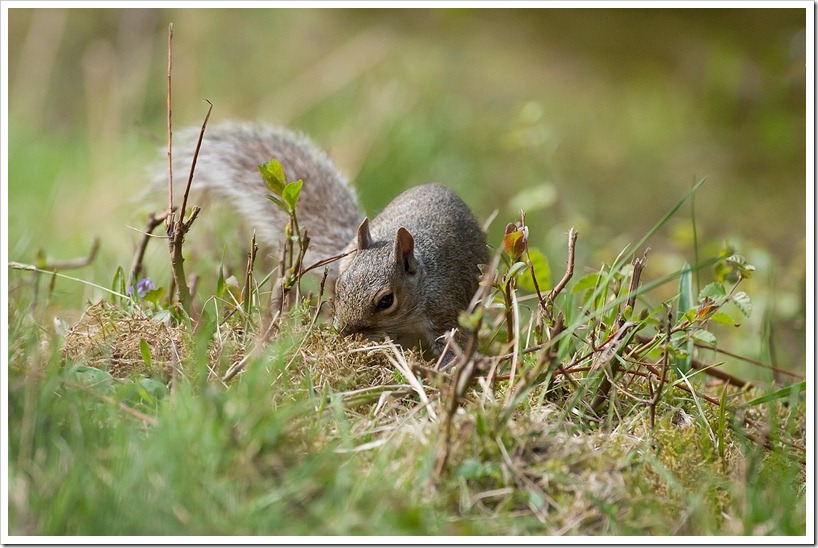
No more obvious of the changing fortunes is the Grey Squirrel.  Nine years ago when I started back into photography shooting wildlife, the Grey was in the process of finishing off taking over the Native Red Squirrel in this area.  The woods where I once used to watch the Reds chasing each other around the trees were now replaced by these foreign invaders and have grown in numbers.  Of all the mammals around this area this is the easiest to find and see.  So, although on the way up in numbers, it’s probably not the most popular success story by most.

IMG_04346
 

Red Kite

When I was growing up, the Red Kite was very rare.  My trusty old ‘Birds of Britain and Europe’ book had them living in only a small area of Wales.  Once very common, it was almost wiped out through persecution by the 20th century.  In 1989 around the Gateshead area of North East England it was reintroduced (as it was elsewhere in the country) with great success.  Now, in this area at least, it is the most seen bird of prey and one of my favourites and I never cease to be impressed with the sight and sound of this bird.  During the winter months they communally roost so you can see a dozen or more in any one area.

IMG_21226
 

The Buzzard

The Buzzard, like the Kite, was also persecuted but, unlike the Kite they survived and as laws have been brought in to give birds like this some protection, this bird of prey has managed to not only survive but become what is now the most common bird of prey in the UK.  As with the Kite, it was only a short time ago that I first saw one of these birds and it is also a sight to watch one gliding overhead.

IMG_14736


arrows_back_forward

No change

Roe Deer

At first I never saw one of these.  They would have been around but I didn’t have the knowledge or experience of finding them.  I’m sure during the nine year period I’m including in this post, the Roe Deer has probably increase in numbers but it’s not something I have particularly noticed.  Even if you don’t see one due to their timid nature, the signs are all around that they are here and again, an animal I just love to watch.

IMG_07306
 

Kingfisher

Purely from my experience of this bird over recent years I have it in this section though it could belong ‘Fluctuating’ below because it is very susceptible to a bad winter of which we have had a few, but their numbers seem to bounce back.  What I have found is that there doesn’t seem to be a yearly regular spot I can go to see them and even where I can, this will change on a month to month basis.  Perhaps my favourite birds to watch and photograph.

SMP_46945
 

Heron

Definitely a consistent regular.  Anywhere it seems where there is water there’s a Heron – Lakes, ponds, rivers or the coast, more than not you will see one.  A photogenic bird and one that will often conveniently keep still for you although it doesn’t like you getting to close to you.  It has it’s comfort zone and you can be very visible outside of that and it will ignore you, but step inside of it and off it goes.

IMG_07766


arrows_green_red (1)

Fluctuating

Fox

By fluctuating, I mean that these animals have been sighted by me in regular numbers for a while then gone through a lull then picked up again, though I’m sure this would be localised.  The Fox some six years ago, I was practically ‘tripping over’ them wherever I went.  There were places I could go were I would almost be guaranteed to see them and could do so in the middle of the day.  Then they were gone.  Since Fox hunting was rightly banned, it’s meant you can actually see this animal in daylight and is my favourite mammal to do so.  There is something about having one look right at you – almost wolf like with those eyes – and I’ve had numerous close encounters with them that has given me that special connection with nature, which reminds me why it is I like to spend so much time out in the wilds.

IMG_22836
 

Rabbit

I’m sure the Rabbits and Foxes lives are intertwined in their numbers.  Rabbits will go through periods where their numbers are very numerous then they will go into decline and alongside this, the number of Foxes will correspond with this since they prey upon them.  I think due to their ability to multiply however, Rabbits can gain their population much quicker.

IMG_32446
 

Sand Martin

I’ve seen Sand Martins every year but their numbers seem to vary on their ability to find suitable nesting areas and in recent years, at least the areas I visit, these have been fewer in number.  In the two most noticeable areas that I usually visit, the sand banks have either collapsed or more eroded making it easier for predators to get to the nests within the banks.

TBP_51926
 

Short Eared Owl

This is an owl that’s largely a winter visitor and their visiting numbers will greatly depend on the severity and type of the winter otherwise they will stay either further north or south.  Three to four years ago, they were found in large numbers a a number of locations, the past winter they were far fewer to be seen.  There numbers also depend on the prey around so a good year for voles and mice will help keep the numbers up.

SMP_34766


arrows_green_red

On the way down

Kestrel

When I was growing up the Kestrel was the most common bird of prey in the UK and one I would regularly see – the hovering Kestrel is a very distinctive sight, in fact, apart from an Osprey I saw on a family holiday in Scotland, I had seen no other bird of prey until many years later.  In the last year I’ve had four sightings of them, I previously could almost guarantee to see one when I went out, but not now.  Hopefully it’s not a permanent change of fortunes for the Kestrel as I’ve always enjoyed watching this bird hunt and it would be a great loss.

IMG_29576
 

Red Squirrel

As obvious as the Grey Squirrels rise in fortunes, so has been the Reds demise.  It didn’t seem that long ago that these idyllic little animals where the only squirrel around and very common.  Along with the Fox they have been my favourite animal to watch, with their pluckiness and curiosity you can’t help but love them and they are so much better looking than the Grey – their ultimate reason for their quickly vanishing from our woodlands.  Unfortunately, I haven’t seen one in two years and unlikely, at least in this area, that I'll see one again!  They still have a refuge further up in Northumberland and hope to spend some time later photographing them their before they disappear from there too.

IMG_32966
 

Puffin

Despite seeing them in as apparent large numbers as usual whenever I’ve visit the local Farne Islands, they are on the decrease, they say due to the seas warming and so the loss of their main diet of Sand Eels.  If this is the case, much like the two animals above, it would be a huge loss.  As with those two, the Puffin is a great animal to watch and like the Red Squirrel, seems to have it’s own special character.

392X0102


I’ve added two other animals under no particular grouping, the Otter and Sparrowhawk.  Technically both are supposed to be thriving though I rarely see either.  The Otter is a success story, once very rare due to the pollution of the rivers in this country, now that they are much cleaner they are now found all over the country, even in the local Tyne River, once extremely polluted due to the shipping industry.  Apparently they can be found under the city lights themselves, but being nocturnal, are seldom seen unless you’re lucky.

My typical sight of a Sparrowhawk is seeing shoot past in a wood as it chases its prey or I’ve disturbed it just after making its kill.  Their signs of a kill are common – just a load of feathers of a pigeon which it would have then taken off with.  To get a photograph of one is even rarer than seeing it due to living in the woodland and rarely keeping still or out in the open.

Again, this is just a few of the most noticeable animals in recent years and there are others such as Barn Owls which I haven’t seen for a while and woodpeckers both Green and Great Spotted which I see and hear more often.  I wonder what differences the next ten years will see.

IMG_22006
 
img_05112

Sunday, 9 June 2013

Along the River

Nothing planned on this day, no getting up at the crack of dawn to catch any particular wildlife at the ‘golden hour’, it was just a case of going out and enjoying this rare spell of warm, dry and sunny weather and where better to spend a day than by a river and watch nature go by.

At first glance the river seemed completely quiet with just the sounds of songbirds in the bushes and trees but staying out of sight.  One of the best things you can do to see nature is just stop, sit down somewhere quite and wait, which is what I did.  The surface of the water had swarms of flies above it and it seemed strange to me that nothing was taking advantage of this possible glutton of food, but after a few minutes there would be the sound of a splash and the sight of a ripple then later, I would just catch sight of a fish leaping out, then another and another.

Fifteen minutes later a female Mallard with her chicks came along and was clearly an opportunity not to be missed as both she and her chicks went into a feeding frenzy.  Unfortunately, conditions weren’t favourable to get a decent image to portray this.  Despite the bright late morning sunshine a combination of bright reflections on the water and shadows of nearby trees created a massive difference in exposure and 1/800th was the best I could do at f5.6.  This meant sudden movements to grab the flies resulted in their being either out of focus or blurred.  Additionally I had a cheaper card in the camera and the buffer was struggling at the ten frames per second I needed to hopefully ‘catch the moment’.

You can see the flies in all the images including where they are going for one.  The highlighted out of focus circles you see are also flies giving you an idea of their numbers.

Mallard with Chicks

Sharing a family meal

Mallard
Mallard
Mallard catching flies
Mallard chick catching flies

Just out of reach for this little one!


On the wider more open parts of the river, the same swarms of flies were feeding the Sand Martins and I gave it another attempt to photograph these nimble flyers as I had tried last week.  I had the same problem of only managing to get a focus lock on them whilst they had the sky as the background, once they went below the tree line, focus was gone.  Without wanting to get too close to the nests I managed to find a way down to the rivers edge giving me more of a lower view point and so more sky.  Unfortunately I also had a limited viewpoint due to trees to my right and left and after watching them for a while to see any flight patterns, I noticed they often came in from my right before heading for the nests. 

I couldn’t focus on them while they were behind the tree coming in, but I could still track them in my view finder and when they came to a clear spot, hit the focus which then gave me barely a second and a half to lock on, and take as many images as possible before they reached the trees on the left.  I was just getting the hang of this when I realised the rivers tide was coming in and was now at my feet so had to abandon my position and make my way back up to the top of the bank.

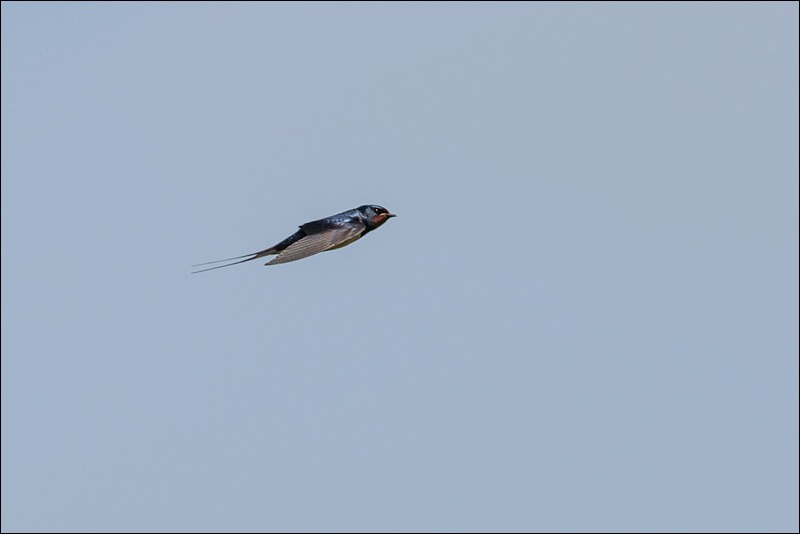
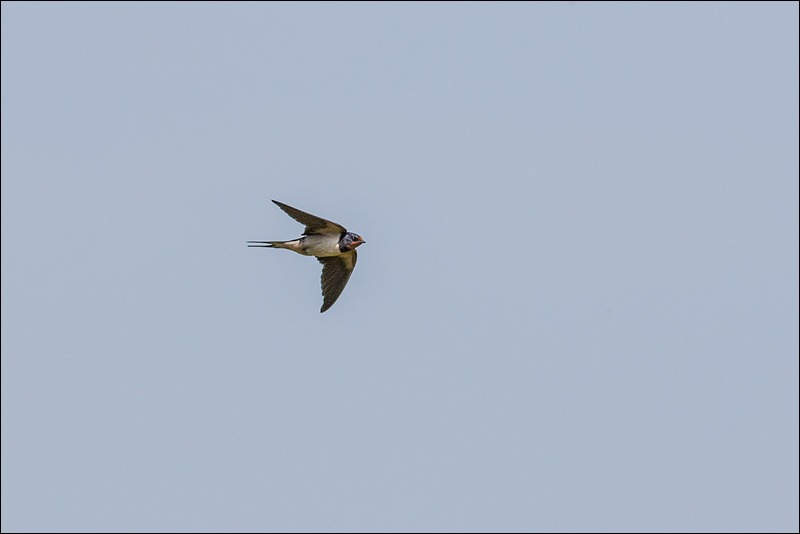
It’s certainly one of my photographic ambitions to get a good in flight image of one of these summer visitors – Sand Martin, Swallow, Swift or House Martins.  I feel it is possible under ideal conditions but I will need to find a better location so will probably not be happening this year.

Sand Marting in flight
 

A quick note about my camera

My main camera and the one I used for this is the Canon 1d Mk III which some may know had, when it first came out, complaints and issues with the focusing.  My camera is within the list of early model numbers ‘effected’ by this issue though to be honest didn’t give it any thought as it seemed no worse certainly than the Mk IIn I was using before.  It also doesn’t have the ‘dot’ in the battery compartment to show it has been sent in to be fixed, so I have been wondering if my camera should be better at focusing than it is.  The problem is I have nothing to compare it with other than the Mk IIn.  I believe it can still be fixed free of charge so may do this.  If it is supposed to focus better than it does especially against backgrounds that are cluttered, then this is an amazing camera despite it age now.


On the way back I noticed Sand Martins in the distance mobbing what I thought was a Buzzard.  It was gliding along the air currents typical of a Buzzard but when I saw it flapping its wings I thought Sparrowhawk, but I’ve never seen a Sparrowhawk, typically a woodland bird, flying high circling like a Buzzard would.  Once I took a picture and enlarged it on the cameras LCD screen it was clearly a Sparrowhawk, female.

SMP_2438

Above - Sparrowhawk doing a Buzzard impersonation.  Below – enlargement clearly identifying it as a female Sparrowhawk

SMP_2438_crop

Below a few more snap shots this time of the first Swallow I’ve seen this year (and for a few years)

SMP_1943
Swallow
Horse in field of buttercups

Finally, an image of this magnificent beast in very idyllic settings

Monday, 8 April 2013

Sights & Sounds of Spring

Finally, at the weekend, there seemed a break in the weather.  The long grip winter has had on the country, seems to at last been released as we experienced some long overdue sunshine.  Temperature lows were still down to freezing early morning but it warmed up to a dizzy 9 degrees.  Walking around the woods it didn’t seem like Spring.  Although I removed one layer of clothing, it was still cold enough to feel the need to wear gloves, at least early on, but it was the surroundings that contradicted the time of season.  The trees were still bare and little signs of growth you would normally expect to be showing by now but the woods were alive with the sounds of birds.  They at least felt Spring had really arrived.

An early encounter with five Roe Deer was my first major sighting of any wildlife.  They were clearly alerted to my presence, stopping and staring in my direction for what seemed an age before continuing.  The female seemed particularly cautious, sniffing the air, but with little wind all I had to do was freeze where I stood until they continued to move on.  The male buck was less bothered by my presence and, as he put his head down to feed, I was able to move closer to get a better shot.  Eventually they drifted off and I didn’t want to follow and risk alarming them, so moved off in the opposite direction.

SMP_9191
SMP_9196
SMP_9218
 

TBP_0117I’ve been visiting these woods now for quite a few years now, in all the different seasons and I new that despite the late arrival of spring, it would be only a few months before the bare, woodland floor would be completely transformed.  Hard to believe that standing in the same spots in the images above and below, they will soon look like the image left which was taken during May.

The ferns will be almost head high and with the foliage on the trees as well, will mean finding wildlife, at least in these parts of the woods, will be very difficult – unless you count the thousands of mosquitoes!  If you walk very quietly in the summer, you have a good chance of literally stumbling across a Roe Deer within metres.

This then is a good time to watch wildlife here in these wood as activity increases, sunrise isn’t too early in the morning and the light for photography isn’t too harsh yet.  All is needed is some decent breaks in the weather.

SMP_9223
SMP_9214

As I walked around that day, it felt very noticeable the varying sounds mostly made by the birds, so it was nice to stop every now and then and just soak in the atmosphere especially by mid morning where the temperature and mostly sunshine, made it feel very pleasant.  All in all I went from dense woodland to open ground and water, each having their own unique sounds.

Below are some recordings of the sounds – all birds and although there are other bird sounds in the background the predominant ones are those titled.  I’m not completely sure about the Buzzard as this is not their typical call but I’m pretty sure this is correct.


Blackbird & Woodpecker


Common Buzzard


Robin & Wren


By the end of the walk I had seen plenty of life, mostly as expected bird although at first glance it wasn’t obvious, sitting still for a while, it was soon noticeable.  Other physical signs included Roe and Fox prints and a couple of Sparrowhawk kills (or what was left).

SMP_9343

Jay tempted by some peanuts

SMP_9467

Male Mallard calling

SMP_9389

Grey Squirrel

SMP_9226

Remains of a Sparrowhawk kill

SMP_9230

One of the few physical signs that spring has arrived

Sunday, 3 February 2013

A Morning at St Mary’s

SMP_8041

St Mary’s Whitley Bay, is one of those places you might see lots of wildlife, mostly birds, or you might just see nothing.   With a return to freezing temperatures along with strong winds though forecast to be sunny, I wasn’t too sure what to expect.

I stopped off firstly at one of the vantage points overlooking the wetlands area – usually the quietest part of the whole area!  After nearly an hour of waiting, I was about to leave when a Kestrel flew low and landed on one of bird tables (why did they put these things up? – they are never stocked and ruin the look of the area).  Just as I started to focus on the bird, someone came up behind me, took out his compact camera and took a few pictures, as if to say that was nice, and left.  I waited an hour in the freezing cold for something to happen and he just walks by just at the right time!

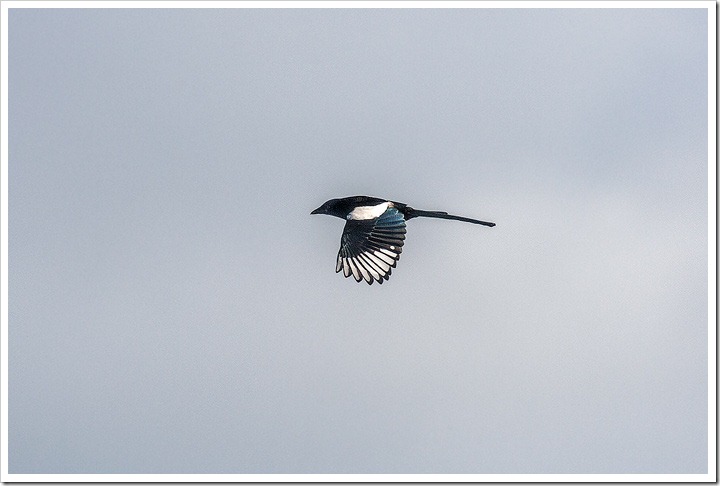
The Kestrel didn’t stay long as it was soon hounded by a pair of Magpies, so flew off at which point a Crow took over and continue to mob the Kestrel out of the area.  I’ve always felt sorry for Kestrels.  Here they are, minding their own business, probably just looking for a mouse or vole and instead gets a whole lot of grief off a bird that’s as big or bigger than it and that’s in no danger from it.

SMP_8063
 
SMP_8337
 
SMP_8076

Sequence of a Kestrel being ‘mobbed’ by a Crow

 
SMP_8083
 
SMP_8084

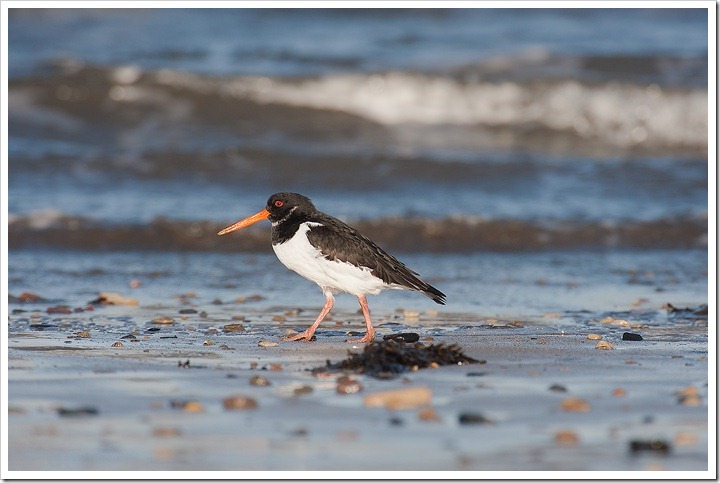
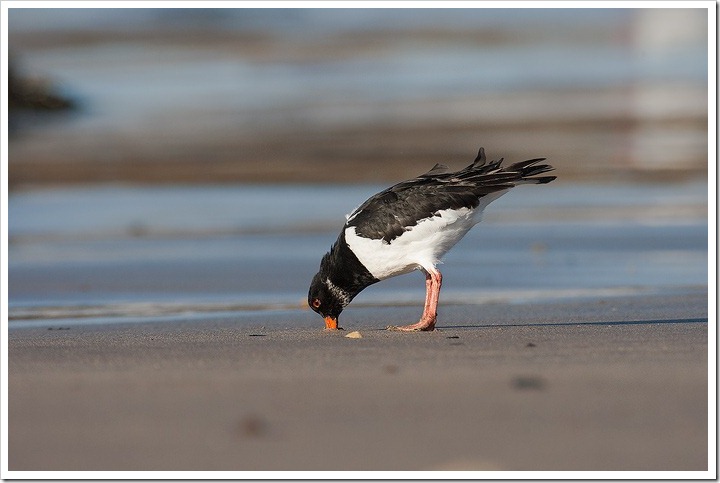
With the only bit of ‘action’ gone, I decided to head to the car park which usually has one or two food trailers – in this case two, Mister Whippy and one advertising ‘hot food’.  Hmm…winter, windy and freezing cold, Mr Whippy or some kind of hot food.  The decision wasn’t difficult and with my warm grub I headed towards the beach which, to my surprise was empty of the usual dog walkers and teaming with a wide variety of waders. 

Initially I just sat down and ate my food, as the tide was going out making it difficult to get close to these birds, but the opportunity was just too good to miss, so I got as close as I dared and sat down.  With my camera backpack on, it makes a great back rest when sitting down and I could rest my lens between my knees.  After the birds got used to my presence, I just snuck a bit closer every now and then though this was negated by the tide going out which of course, they were following, however, the Oystercatchers were big and obliging enough to get a decent picture of.

Conditions were almost perfect from a photographic point of view.  The sun was low behind me and bright enough for me to use a fast shutter speed and reasonably low ISO though I’m always willing to sacrifice ISO for a fast shutter speed especially when using the 500mm lens which, on this day, had the converter permanently attached.  If only the tide was coming in, this would have been a great session and I would have got some much closer images. 

SMP_8141
 
SMP_8201
 
SMP_8219
 
SMP_8230
 
SMP_8221
 
SMP_8243
 
SMP_8265

After around forty minutes the evitable dog walkers came along and the birds were chased off.  Still, with strong, cold winds coming straight off the North Sea, I was starting to feel the cold and needed to get some circulation going so decided to head back.

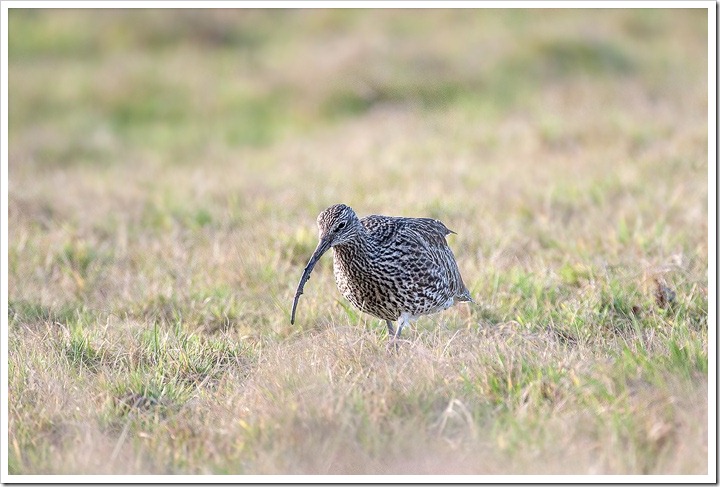
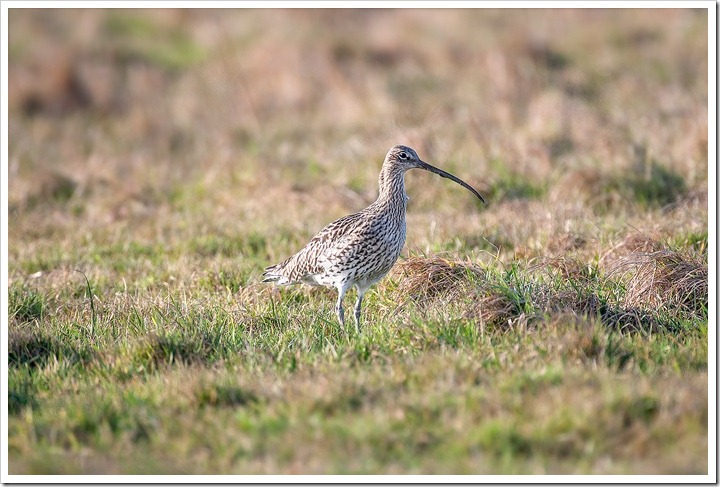
One last opportunity.  In the fields on the way back, were three Curlews prodding around in the earth for, presumably, worms.  They certainly seemed very intent as they ignored me and I was able to get quite close to them as they methodically worked their way along the field.

SMP_8276
 
SMP_8283
 
SMP_8306
 
SMP_8310