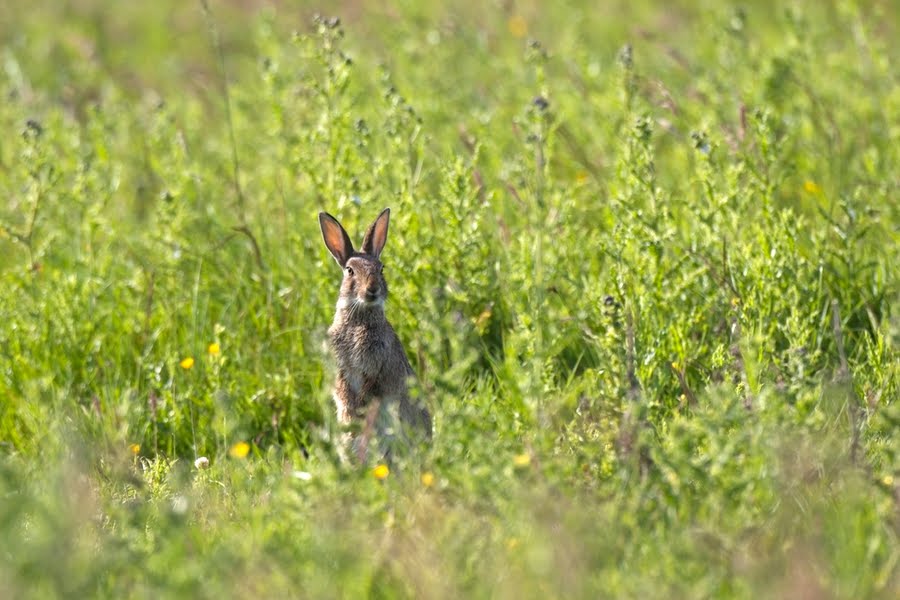
It’s not often I buy a camera brand new and that’s just recently been release, but the R6 was an exception. I’m not the kind of person who needs to buy the latest camera because it’s ‘the latest’ and for the most part I was happy with my 80D which was 4 years old at the time. There was, however, a few niggly things I was finding a little frustrating. Focusing for birds in flight wasn’t anything to write home about and the shutter sound was very audible, even on ‘silent’.
I like to photography in particularly mammals which tend to have good hearing and the last straw came when on two occasions the animal was spooked my the shutter sound and ran off. Come along the release of the R5 and R6. Reading the specs I could see a number of advantages and improvements.
Compatibility
I did have to consider this long and hard as most of my lenses were quite old, especially my long lenses. Canon has a compatibility chart showing which lenses officially work with the R6 an R5 which I was worried about as only one of my lenses was on it. Closer reading and it just meant that these lenses worked at the cameras full potential or close to. For my interest, I wouldn’t get the full 12 fps rate.
Next, the adaptor. I thought this must slow down the performance. All the research suggest not at all but in fact, your lens will worker better.
R6 or R5
Ok, I’ll get this out of the way at the beginning. I choose the R6 for some very good reasons from my point of view which I’ll list below.
- Price: The R6 is already an expensive camera at £2,599.00, but at the time of writing this the R5 was £4,299.00. A price difference of £1,700. Once you factor in the need of an adaptor (£199), a CF Express card (around £169 for a cheap 64GB), you will want the battery grip despite being over priced (around £429 give or take) and although it does take your older batteries, I would highly recommend the newer, high capacity one (£114). Add that to cost and that’s another £911. You may not need or want all of these additions, but the chances are you will want most.
Just to note that since buying the R6, I have brought the adaptor, two additional fast SD cards, a battery grip, additional battery and a used RF25-105mm f4 lens, still for less than the price of the R5 alone.
- Sensor: Now, nobody is going to chose a 20MB sensor over a 45MB sensor, but for me 20MB was ample for my needs. Reading through the forums on the internet and you would think you must have 45MB so that you can crop! If you need to crop by any large amount then I would suggest your photography/field technique is lacking. Look at images posted on image sharing sites and the highly cropped images stand out and look like they’ve been cropped. Cropping an image by any large amount will also emphasise a lower quality lens, atmospheric conditions, camera shake, noise, etc. If your lens can’t handle the megapixels, then you’re basically throwing away many of those 45MB.
- File size: For me, taking wildlife images, a 45MB sensor and the file sizes it creates is a real disadvantage. You can take an awful lot of images with a camera that has such a high frame rate. You then need to upload them, so needing a fast card, view and process them, so needing a good computer, then store them, so needing the storage space. For this, all would have added to the likely overall cost. If this camera was just for landscape work were I take far fewer images, then file sizes this large would not be so bad.
- Noise: This was a factor at first as I shoot a lot in low light, but I don’t think there’s a great difference between the two cameras until you start shooting a much higher ISO’s.
- Battery Life: The battery has a slight benefit in battery life but not by any meaningful amount.
The R5 has some advantages such as additional video options (not a factor for me), a slightly better screen and EVF and the top LCD which is perhaps the only thing I would have liked.
In the Field
This is ultimately where it counts. Out of all the camera upgrades I have done over the years, this has had the most impact and has made a massive difference to what and how I shoot.
Focusing
This has been the most outstanding and immediate aspect of this camera. Every year during the summer, the Tyne Bridge in Newcastle is the home to a nesting colony of Kittiwakes which makes for a great opportunity to photograph birds in flight. For a number of years I’ve gone here with different cameras – the 80D the 1DmkIII with very mixed results. The birds fly through some changing and busy background and are constantly changing direction. The R6 had no problems locking onto the birds.
Below is a series of images taken with the Canon 400mm f5.6 lens, showing the typical backgrounds that in prior years, with the same lens, caused misfocusing.


Animal Eye Tracking
This alone makes the R6 and R5 stand out. It’s simply outstanding. Once you latch onto an animal with it, it will just lock on and keep it in focus. I have my camera set up to have two back button focusing. One for the normal single point and the other for animal eye focusing. If the eye focusing doesn’t immediately or struggles to pick up the animal then the single point will initiate or help it. Normally it will pick up the eye. If it can’t find that, it will find the head and if it can’t find that, the body. Most of the time it will succeed but it isn’t perfect.


Using it with a x1.4 converter
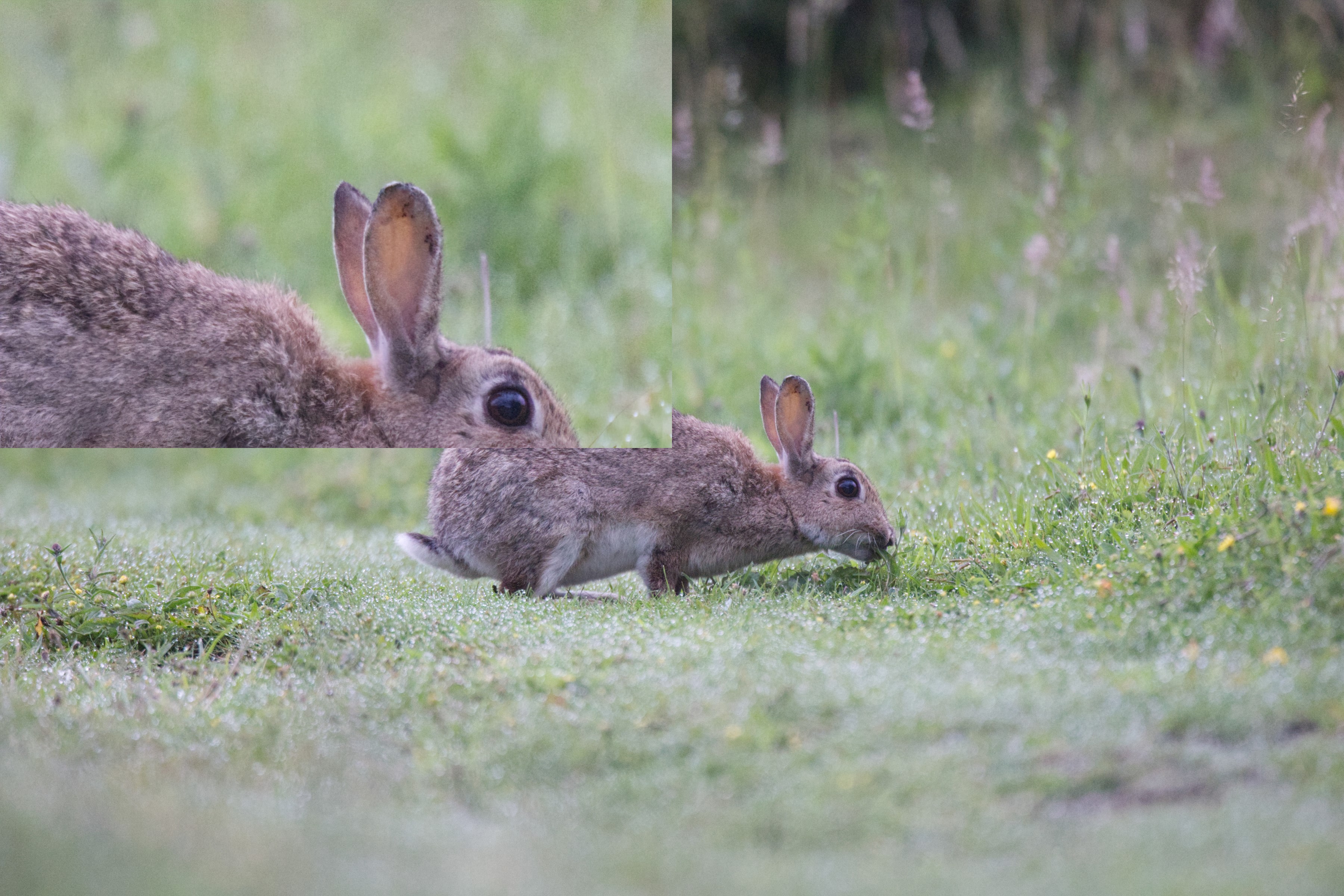
The above were taken with a x1.4 converter on the lens (Canon MkII). There seemed to be little difference in focusing speed. I’ve also used it with a 3rd party lens and converter (Sigma 500mm f4.5 & x1.4 Teleplus Pro 300) which also gave me fast, if not as good as the native version. Below is a series of images of a Brown Hare coming towards me. It wasn’t able to get all images in focus, but it was as much to being unprepared for this event which also meant I was shooting at around 1/400s. Not ideal for a fast moving animal. No sharpening or noise reduction or cropping, just a bit of exposure adjustments.


The first one is slightly out of focus, maybe partially down to the slow shutter speed. The Hare continued towards me until it was too close to focus. I’ve no doubt my old camera combined with this lens and converter, would have misfocused most of these. This series of images brings me onto the next subject.
Shutter Frame Rate
Earlier on I mentioned the frame rate with older lenses. Using the mechanical shutter, I’m getting around 7-8 frames per second, which may not seem much by todays standards but it’s fast enough for most of my needs and if I need it faster I can switch to electronic where I’ll get the full 20. I believe if you use the latest EF lenses you’ll get around 9-12 fps and obviously with the new RF, the full 12.
Rolling Shutter
This is something to be aware of if using the electronic shutter. Not really an issue for me as I wanted the electronic shutter for it’s silence and will probably not be in a position where it’s going to distort an image. Below is an example where it can effect your image.

Image Quality
Now comes the biggest issue people seem to have about this camera and that’s the 20 megapixel sensor. I’ve already shared my feelings about a larger sensor size, but what about this one?
The first two images below are straight out of the camera and just converted from RAW, the second being a 100% enlargement of the birds head. There’s plenty of detail there and having used the Canon 6D for a number of years, also a 20MB sensor, this one feels much cleaner and sharper.


Noise
Another reason for getting the R6 was better noise at high ISO’s but I wasn’t expecting just how good it was going to be. Previously I topped my ISO at 6400 and even then used it sparingly. Now I have it at 25600, though again sparingly but have no hesitation to go up 12800. The first image below is at 20000 and with some noise reduction, whilst the second is at 25600, taken around 20 minutes before sunrise.

Thought it might be an interesting comparison to see how far camera sensor technology has come over the year. The first image below was shot on my old 30D at 3200 ISO. The second with the R6 at 12800 ISO. Neither processed.

Battery Life and the Battery Grip
If like me and you’ve come straight from a DSLR, then the rated battery life of 360 shots is a bit of a worry. I have to admit when I first went out with this camera, it felt much less and it started to concern me. However, if you listen to others who have this camera, most are saying they are getting much more and I’ve since looked at advice on how to extend my battery life. Soon I was getting a lot more, to the point I would carry a spare but not worry too much about it.
Since then I’ve added the battery grip – admittedly over priced – but this did come with the offer of a free battery (the new LP-E6NH). This now gets me through a whole day’s shooting. The grip also helps with the balance of a long lens and just makes the camera a bit more ergonomically comfortable if a little heavier.
The EVF
I wasn't sure what to expect with the camera's EVF having never seen through one before, but I was pleasently surprised. You can set it up in a number of ways including what you see is what you're image will look like or you can have it so that what you're seeing is how it currently looks. Having the former means you can get the exposure correct up front.
It has an OLED EVF with around 3.69 million dots and a 119.88 fps refresh rate. This can be reduced to save batteries but I've kept it on it's hight setting. Since I shoot a lot in low light, having it set up so that what I see is the same as my exposure means it looks bright when my DSLR would look dim.

Buffering
I've been using ScanDisk Extreme Pro UHS-1 cards, so not the fastest but I've yet to experience reaching a buffer image, even shooting at 20 frames per second. Having said that, I think the longest I've shot is around 3 seconds but I've found I can still take more straight after without delay.
Conclusion
I've had this camera for nearly a year now and haven't managed to shoot in every kind of situation or subject that I have using my previous DSLR, but I have covered most. This has been the biggest and most notible upgrade of any camera I've made. The biggest improvements for me for my wildlife photography have been the focus speed/eye tracking, lower noise and silent shutter. I know without doubt I have got images I couldn't have on my pervious cameras.
A Few Question Marks
There has been some negatives but most have been overcome, but will go through them here. Megapixels. I have said 20 is enought for my needs but there is that nagging psychological 'if only it had a few more'. I think it's imprinted on digital photographers, but honestly, it hasn't been an issue. I like to get as close to my subject as possible - it's part of the challange of wildlife photography. If you have to crop heavily on a regular basis, there's something wrong with your fieldcraft.
I do miss not having a top LCD screen but it's something you adapt to.
View finder lag. You can get this when shooting a fast moving image going across you. It makes it a little more difficult to keep the subject in the view finder, however, you get used to this and compensate for it and now I don't realy think about it.
Battery life if not what I'm used to and at first was shocked how bad it seemed to be. But a lot of research and delving into the settings along with a battery grip with the newer batteries, I no longer find this an issue. It's something you just have to be aware of and I always take a spare set of batteries with me.
Electronics. The more relient on electronics the more that can go wrong. I've had one situation where the camera 'died' on my at the worst possible time. After some researching it may have been down to the cards I was using and since doing a regular low level format on them, it hasn't happened again.
Any disadvantages are outweighed by the massive amout of advantages, to the point now where I would be hard pressed to go back to a DSLR, at least for my wildlife.
EF Lenses I've sucessfully used with no issues:
Canon 500mm f4 Mk1
Sigma 500mm f4.5
Canon 400mm f5.6
Canon 300mm f4
Canon 17-40mm f4
Samyang 14mm f2.8 (manual version)
Canon 1.4x II & Teleplus Pro 300 1.4x Extenders (the latter not working on the Canon 500mm)
The only lens I had some issues with but still works, is the Sigma 105mm f2.8 Macro (non IS version)