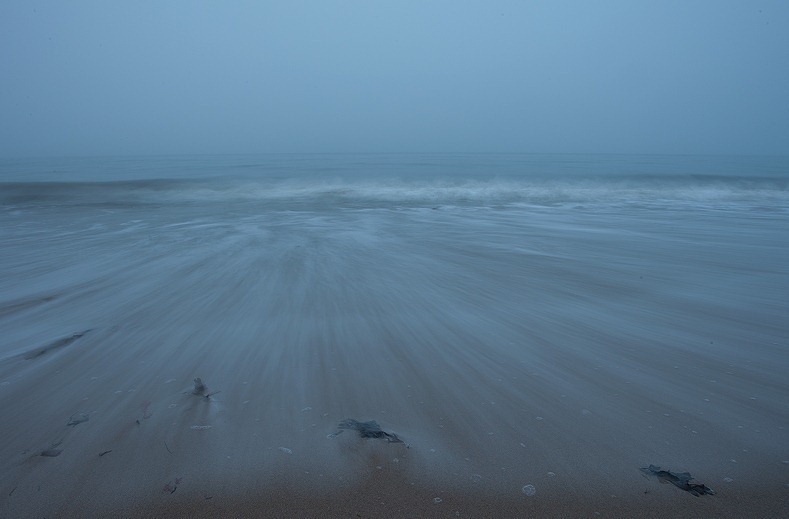
| At this time of year I find it’s one of the best times for photographing early morning landscapes due to the time of sunrise – not too early so that you have to get up at a ludicrous time, but any later in the year would mean temperatures at sunrise being much colder. Even the equivalent time in Spring (sunrise at 7:30am) is colder. The problem with photographing a sunrise at the coast is that everything has to be just right. Along with the above, I make sure the tide is going out (so that that you don’t get trapped by the incoming tide), and that it’s a couple of hours from high tide (so rocks are exposed but you don’t have to clamber over them in the gloom when getting to your set up point). The final ingredients, is the weather – in this country the most unreliable. Ideally, broken clouds which will hopefully give a ‘red’ sunrise as the rising sun hits the clouds. Too fewer clouds or completely clear isn’t so dramatic, overcast is more bland without the bright, changing reds and oranges. On this occasion the forecast was for an overcast but misty morning which I thought might give its own effect. I got on location with plenty of time before sunrise on a reasonably mild morning thanks to no wind. Unfortunately the tide was still quite high so the only exposed part of the beach was sand, but I set up my camera on a tripod and tried various exposures to give some different effects of the waves coming in. I find starting the exposure just as the wave is at it’s peak and pulling back with the next just coming in to break, gives the best effect. With the mist and overcast conditions and just at the point of sunrise, gave a blue cast to the images. |
 Just before sunrise and completely calm |
 |
 |
 |
 |
 |
 Different exposures - Above 1.6 seconds. Below 331 seconds |
 |
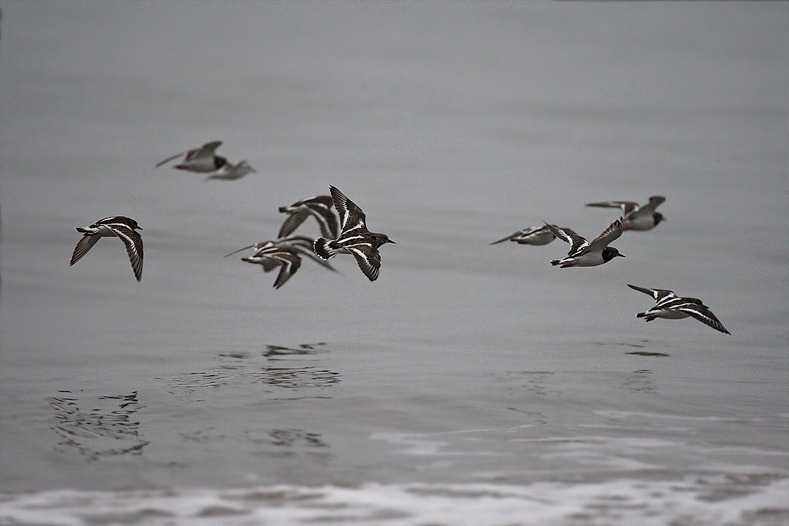
| As the sun got above the horizon, the colours changed from a bluish cast to a more typical grey you would expect from an overcast day. I brought along my telephoto lens just in case any opportunities arose for wildlife, and there were various waders, but with the tide going out, this makes it less easier to photograph as they are following the tide out, so constantly moving away. It wasn’t helped also by the very dull lighting conditions, making trying to ‘freeze’ one of these spritely birds, very difficult. The images ended up looking almost black and white. |
 |
 |
 |
 The Sun attempting to shine through the cloud cover |
Wednesday, 24 October 2012
Monday, 16 July 2012
Along the banks of the River Tyne
| It’s been the longest period since starting this blog that I haven’t posted anything, mostly down to recent events leaving me badly lacking in motivation. Ironically, starting back into my photography and in particular, the blog, was to help get me out and work as a distraction. So I’ve put together some images taken over the summer during a few visits along the River Tyne. One of my regular yearly visits has been the nesting areas of Sand Martins along the banks. Each year they’ve tended to alternate this location though this year they’ve kept the same one as last year which, unfortunately, was in a difficult place to take photographs as most of the nest entrances were hidden from clear view. The best chance to get a photograph was to watch them for a while and work out the best place to pre-focus the lens and then just wait and hope. Still, most of the images were out of focus due to the very narrow depth of field caused by the long lens and low light. |
 |
 |
 |
| A visit further up the Tyne made for a nice walk with nobody about on a nice peaceful summers day, but with little of photographic opportunity. |
 |
 |
 |
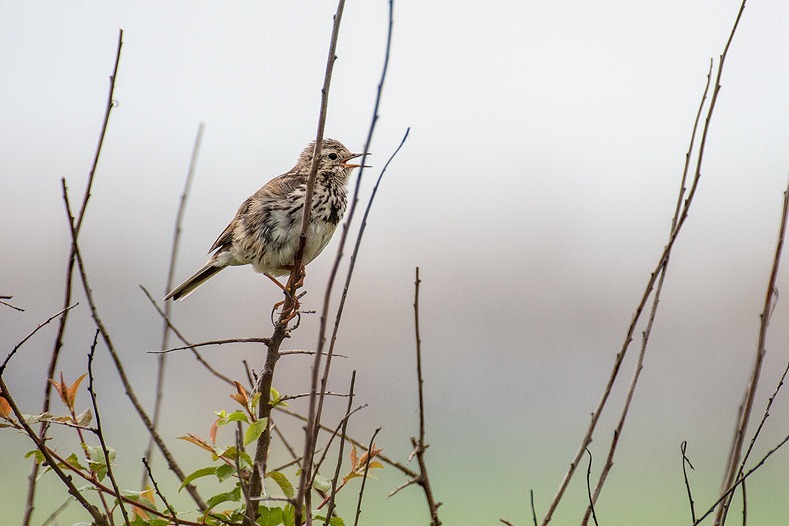
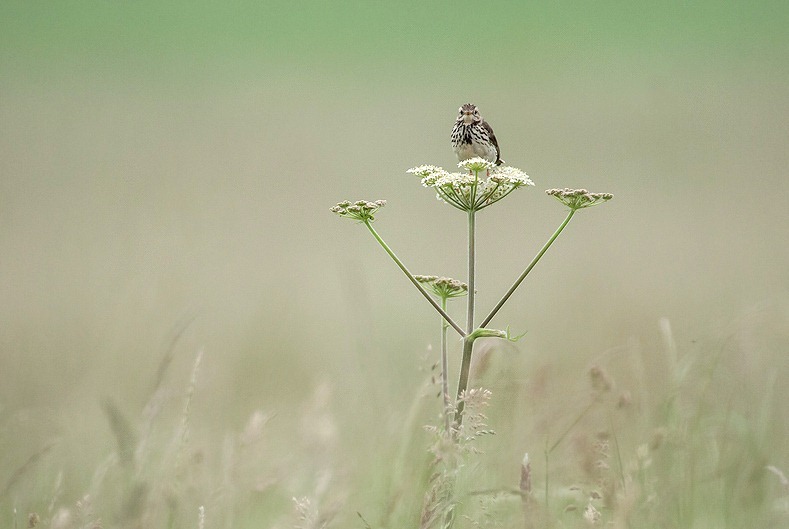
| On one of the hottest days of the summer on a grassy section, the Skylarks were out in force. Their sound is just one of those that typify summer and I just sat for a while listening to them. They were all singing from their own patch seemingly competing with each other and an obvious behaviour pattern showed. Although they were mostly hidden in the long grass, occasionally they would fly up into the air and sing while hovering or move to a high grass stem. This is gave me the photo opportunity though difficult. By the time I'd even manage to get such a small bird framed in my camera, I had to manually focus. Each time it went into the air, I had around three seconds at most before it went back down into the grass. Most of the following photos then were of the skylarks perched on a grass stem or a bush. |
 |
 |
 |
 |
 |
 |
 |
 |
 |
| On one occasion whilst perched within the grass, the Skylark flew up startled by something in the grass. I had no way of knowing what but it must of moved on as the Skylark quickly settled down again. |
 |
 |
 |
Tuesday, 10 July 2012
A Break in the Weather
| I decided to make the most in a break in the weather and head down to the coast. With so little in the way of opportunities recently to get my camera out and photograph a bit of nature, I new this particular place, at this time of year, would supply me with a guaranteed success. Also, after my trip to the Farnes I wanted to practice photographing birds in flight. The problem when I was photographing the Puffins a few weeks back was not so much the focusing, but the camera technique – getting the bird in the frame and keeping it there long enough for the camera’s focusing system to latch on. I was getting them in focus but clipping part of the birds. So, I tried spending about an hour and a half just shooting, what turned out to be, Common Gulls, flying around. These were on the cliffs at at Marsden Rock, South Shields where there were no shortage opportunities and at just the right height. |
 |
 |
 |
 |
 |
 |
 |
| Hand holding a 500mm lens for over an hour is going to make you suffer, so before I completely tore any ligaments in my arm, I moved on to their nesting areas. There was constant toing and froing among the parent gulls and the noise defining as they squabbled and fought for places on the cramp cliff ledges. They almost seemed to be ‘time sharing’ their spots as one came in the other left. This seemed a bit strange as further up the same type of cliffs had very few gulls nesting – maybe they like each others company! On the nests, one of the parents would arrive with food to regurgitate to the chick while the other seemed to remain on guard presumably. I’d spoken to two people who had seen chicks being taken by other gulls. Maybe this was why they were nesting together – for added protection. |
 View side from below the cliffs showing the crowded ledges |
 One of the parents coming in with food for the chicks |
 |
 |
 |
 Squabbling amongst each other |
 |
| Maybe gulls are not the most glamorous of subjects but getting out with the camera after so little opportunities this ‘summer’ but it was a much needed bit of photographic therapy and there’s also something very therapeutic watching even this kind of noisy sceptical. |
Monday, 2 July 2012
Puffins galore
| Some more images from last weeks visit to the Farne Island. I thought for this post I would give a bit more technical information for anybody who may be planning to go there themselves. There was a lot of people there taking photographs, some obviously for just a memento of their visit, but others, judging by their kit, were very serious (or just rich) photographers. The first thing I would say is that you don’t need a long lens – there were birds all around you, many within arms reach. There is no doubt that this is one of natures spectaculars, there can’t be many wild places you can go to where you are so close to so much wildlife. I was surprised by the amount of 500mm lenses there were there. I would have thought that completely overkill and in fact, a hindrance. If you want to take pictures of the stationary birds then any camera and lens would do, but if you wanted to try them in flight then a 300 or 400mm lens would be ideal. I used a Canon 1D Mk III and 400mm 5.6 lens but the Canon 100-400mm lens would have been ideal. The temptation with so much going around you is to just take loads of photographs and hope for the best. I had the advantage of my previous visit but still, I waited for the first 5 minutes or so and just watched where and how the Puffins were coming in and found the best spot to catch them and in the best light. Unfortunately the sun was shinning from the direction of the sea which is where they were coming in so had to get them as they crossed over to their burrows. If you waited until the birds were ‘in range’ they where already gone, giving you no chance to even get them in the viewfinder, never mind in focus. I looked in the distance, through my viewfinder for one bird coming in and followed it – giving my camera time to focus on it. Even so, more than 50% were out of focus or clipped out of the frame. Most of these images I’ve included, are in flight ones using the fastest shutter speed I could to prevent camera shake and to freeze the action. Some of the images I added exposure compensation though I also tried spot metering. The problem with the latter is that it could over expose the white feathers. I also, when the shutter speed allowed, increased the depth of field to help get as much of the bird in focus. |
 |
 |
 |
 |
 |
 |
 |
 |
 |
 |
 |
 |
 |
 |
 |
| From a wildlife or photographers point of view, you could easily spend a whole day on the island as the one hour allowed is very quickly gone. Had I had more time I would have tried to be a bit more creative – maybe trying slower shutter speeds, different angles, lenses, etc. |
Subscribe to:
Posts (Atom)


