| The last month has been one of those periods where, for one reason or another, I have had no luck in seeing, never mind photographing anything. Considering the time of year you would think the countryside would be brimming with life. With this in mind I decided on Sunday to go to the coast where I new there would still have various seabirds – Gulls, Fulmars, etc., and I could practice some more birds in flight techniques and this would help alleviate my photography withdrawal symptoms. Armed with the Canon Mk III and Sigma 500mm f4.5 I decided, since it was a nice day, to start off at Marsden Rock and walk along the beach and cliffs to Trow Quarry South Shields. |
 |
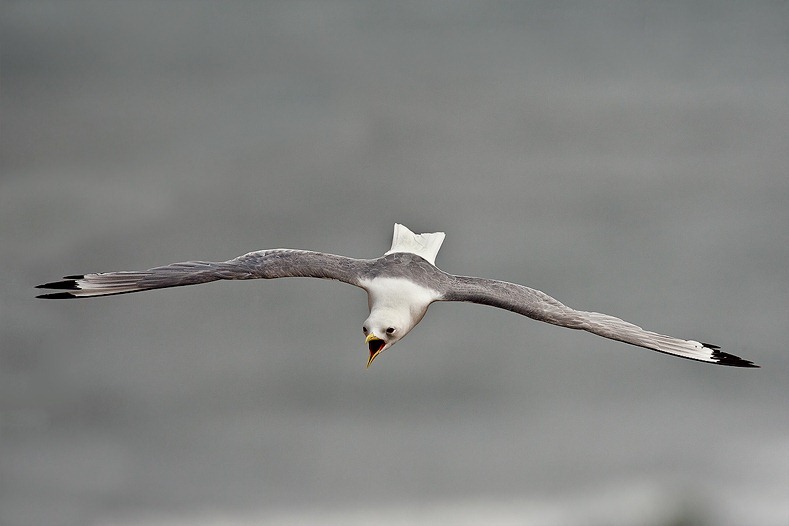
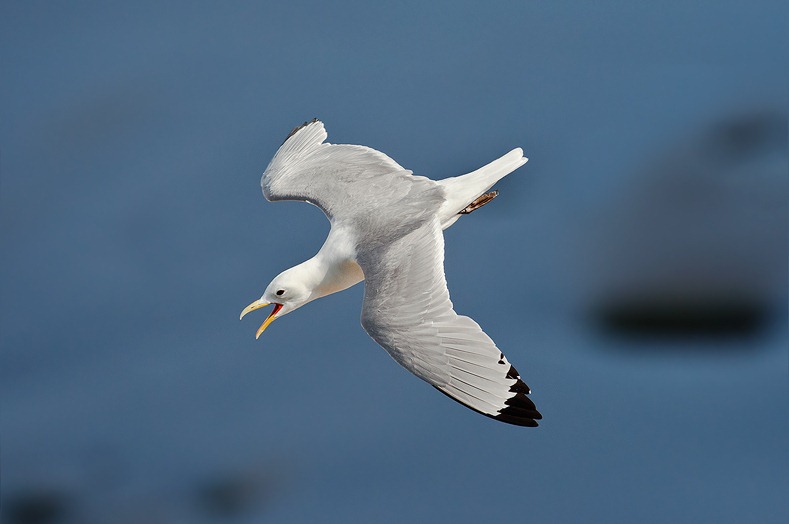
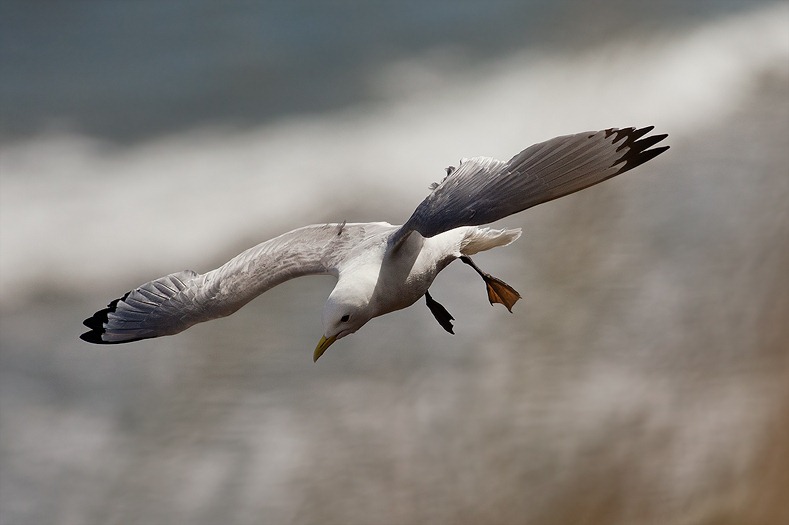
| Marsden Rock and the nearby cliffs, I think are a much underrated area for wildlife, in this case seabirds. It may not have the more exotic birds such as Puffins or Guillemots you get on the Farne Islands but it was a close comparison when it came to the shear amount of noise that many nesting birds make. A set of steps going down from the top of the cliffs to the beach made an ideal location halfway down to photography the gulls in flight which clearly showed a pattern to their flight enabling me to roughly guess the best shots, though it still tested the cameras auto focus abilities (not to mention my arms strength). |
 |
 |
 |
 |
 |
Above Marsden Rock looking north – below part of the Nesting cliff face |
 |
 |
Some (above) were able to sleep despite the noisy neighbours (below) |
 |
| After filling up two cards with images and not pushing my luck by staying underneath the cliffs, which were basically a very large bird toilet, I decided to start the walk north, along the shoreline where a lot of the juvenile birds had collected and were feeding and squabbling amongst each other |
 |
 |
 |
 |
 |
| With another card filled up I continued my journey where my attention was quickly taken to some noise above me. As I looked up I saw half a dozen small birds ‘chasing after’ a Kestrel which flew to the end of the beach and joined another one hovering over the cliff edges. Too far away to get any kind of decent photograph, I quickened my pace in the hope they may still be around by the time I reached that point. By the time I did get to the bottom of the cliffs where they had been, one of them flew back over head (followed by a small swarm of mobbing birds again!) and the other had made its way along the cliffs in the way I had just come, just as I had got up the cliff steps to the top. Making my way back along the cliffs the Kestrel returned giving me and a number of gathering onlookers a great sight of it majestically hovering into the wind and then occasionally diving into the grass edge which unfortunately, was out of sight. Although I was able to take some photos of it rising up again and pass something from its talons to its mouth, I couldn’t see what it was, but to eat it on the wing it must have been smaller than a rodent. It wasn’t until I got home and checked the images that I realised that, although I had compensated for the exposure so as not to get a silhouette, I hadn’t given it a faster shutter speed. (Too engrossed in watching this spectacle) The third image below of the Kestrel hovering was shot with a 500mm lens plus converter at a shutter speed of 1/640 so I was lucky that I managed so many in focus as the actual focal length was 700mm, hand holding the lens and a strong breeze. The normal rule is to have a shutter speed faster than the focal length. Because it was relatively still whilst hovering these were ok whereas those of it diving and rising were blurred to some degree, still I was happy with the results and to be so close to such a display. |
 |
 |
 |
 |
Above - Looking back at me and below a rear end view, talons at the ready |
 |
 |
 |
| After the Kestrel moved off, I continued my last leg of the trip, to finish up at Trow Quarry. Every time I have visited this place, I have hoped to see the ‘resident’ Little Owl. After another, none to optimistic search, I finally spotted the diminutive owl perched on a rock edge starring right back at me watching it through my binoculars. Unfortunately, it wasn’t as pleased to see me as I was it, as it bolted into crevice before I had a chance to even think of photographing it. At least I had finally seen it and, I figured, since it went into a ‘hidey hole’ rather than fly away, that location was probably where it lived and so now I know where where to look, a more stealthy approach next time might produce a photo opportunity. All in all the day produced a boost to my much needed for wildlife and photographic success. Just as a side note for anyone interested in the photographic side, particularly the Sigma 500mm lens, the whole walking trip including stopping to take all the photos, I was carrying and hand holding the lens – a total of around five hours. |
Showing posts with label Marsden Rock. Show all posts
Showing posts with label Marsden Rock. Show all posts
Tuesday, 2 August 2011
Friday, 1 July 2011
Sea birds in flight
|
At this time of year there is a lot of nesting birds on and around this outcrop – Fulmars, various Gulls, Crows and Cormorants and with the sun shining and a light breeze, it was ideal conditions. This is definitely a skill that needs a lot of practice, not just knowing the cameras focusing settings, exposures and lens techniques, but also knowing how the subject would behave. For the latter I realised the birds nearest to me were following a similar flight pattern and I positioned myself in a gap on the cliffs. Shooting down onto the birds made for a nicer backdrop and a more interesting view, unfortunately the mixed background and brief view of them as they flew below my view, (and not helped by their sudden twisting and turning) made for difficult focusing. After an hour and a half my images were getting better with my experience, however, hand holding a 500mm lens for that length of time meant my arms and wrist were aching and towards the end the ‘hit rate’ went down as a result. Managed to get a few decent ones and will give it a bit more practice. |
 |
 |
 |
 |
 |
 |
 |
 |
 |
 |
 |
 Not really being much of an expert of photographing birds in flight and after my recent trip to the Farne Islands, I thought I’d get a bit of practice in today at Marsden Rock off the coast of South Shields.
Subscribe to:
Posts (Atom)


