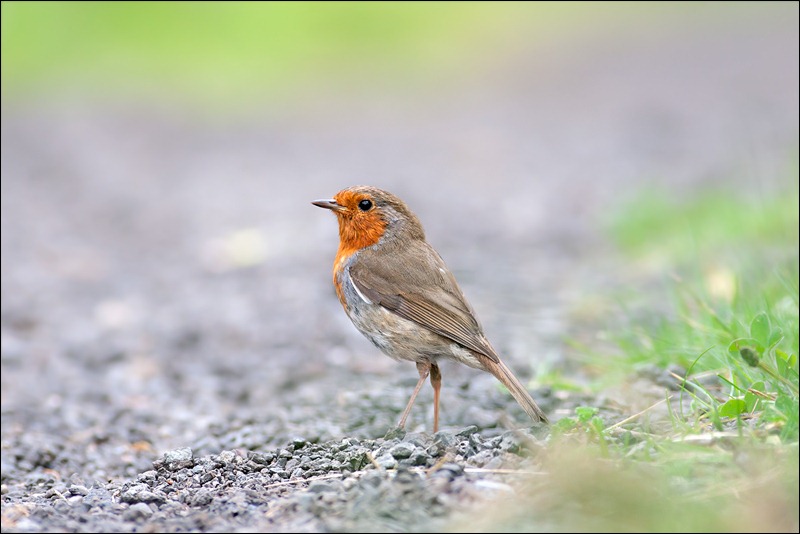
| Well, technically yes. However in reality, with temperatures struggling to get above 15 degrees, cold strong winds from the north and always a threat of rain each day, it doesn’t feel like it. I suppose I shouldn’t be surprised. Each ‘Summer’ we wait for that spell of warm, sunny and hopefully dry weather which you hope for by this time of year and before you know it, it’s Autumn and another year’s gone by and you’ve go six months of cold, wet weather to look forward to. So it was with high hopes, optimism, a forecast of plenty of sunshine and a drop in that cold wind that I went out with the plan to make the most of these rare conditions by doing some macro, infrared and Sandmartins in flight photography – all ideally requiring bright sunshine. Unfortunately by the time I arrived on location, the sun was rapidly disappearing and after spending some time hunting around for a few macro opportunities I settled by the edge of a large pond hoping for some insects there, but little was stirring. With little in the photographic offerings, I decided to tuck into a pasty I picked up on the way which turned out to be pretty disgusting but got the attention of a Robin which fluttered in close by. |
 |
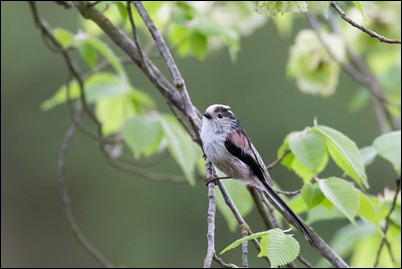
| I then caught sight of movement in the bush next to me and saw a Long Tailed Tit just within arms reach of me. I’ve never been that close to one of these birds, only from within the viewfinder of my camera with a 500mm lens and converter lens attached. To actually see one of these very pretty little birds so close was quite a sight. I notice it was making a bit of a noise despite having some food in its mouth and as it disappeared into the bush and I heard some frantic chirping, I realised there must be a nest of chicks right next to me (see image below), so I withdrew to a distance. There was a temptation to, at the very least have a look in the bush for the nest or take out my 105mm lens and take some photos of the chicks, but with my interest in wildlife and particularly photographing it, I’ve always tried to put the welfare of the animals first and, although not illegal to disturb this particular bird at its nest in this country, I felt it wrong to have done so. |
 |
| Above – showing where the nest roughly was. Below - the only, poor images, I managed of the Long Tailed Tits as they darted in and out |
  |
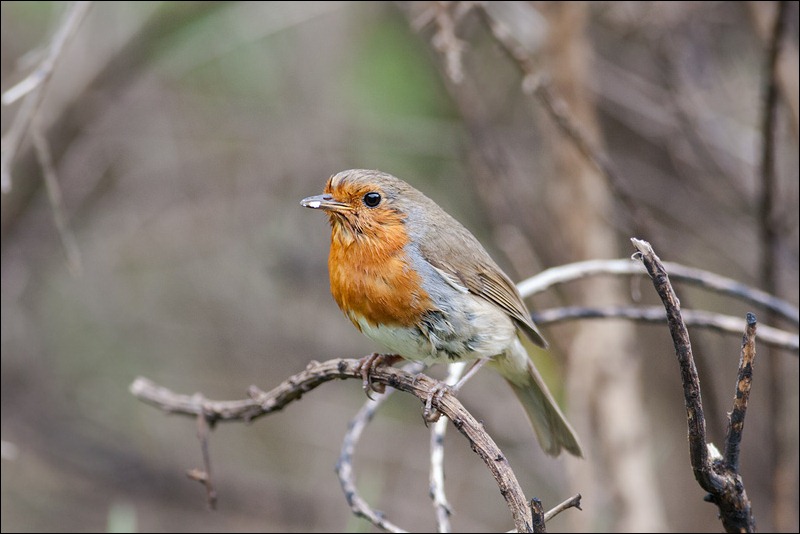
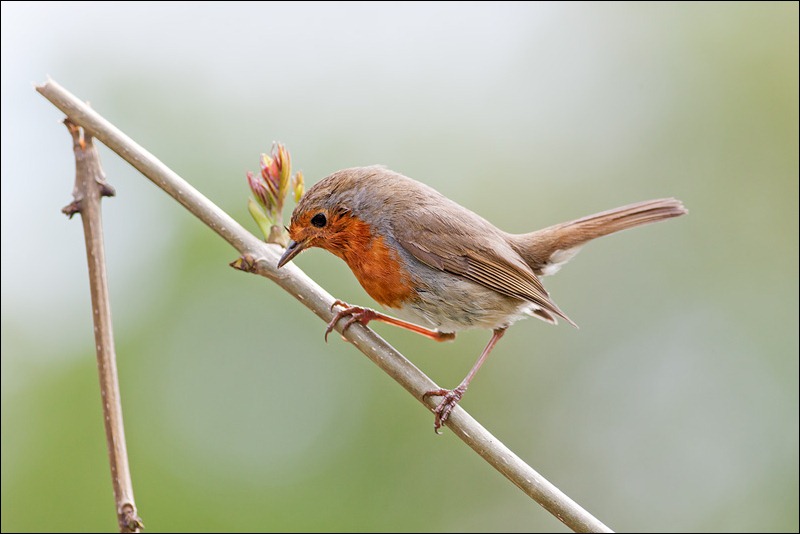
| Knowing how close I was to the birds as they flew in and out of the nest, I could have got a great picture of them however, withdrawing a respectable distance meant I was on the wrong side of their approach and could only get some distant or obstructed views. I sat and waited in the hope that one of them might land on the top or side of the bush. With a green out of focus background and the thorny bushes with their yellow flowers as a perch, this would have made an iconic image. As I waited and the parents regularly flew in with food for their young but not giving me the ‘shot’ I wanted, the Robin landed on bush to my other side and just looked intently at me. Again, it was almost within reach. The 400mm lens I had attached to my camera would simply not be able to focus on something so close so I tried to quickly attach my 105mm lens and, just as I pointed it at him/her it was off. I changed lenses back in anticipation of my iconic shot of a Long Tailed Tit when the Robin returned, landing on the same twig looking at me again. This time I did nothing and it dropped down to where I was originally sitting next to the nest while eating my tasteless pasty. It was after the flakes of pastry left behind. After about ten seconds, it flew into a nearby bush then away. Fifteen minutes later exactly the same thing happened again. Switching back and forth between the 400 lens for the Long Tail Tit and the 105 lens for the much closer Robin wasn’t working. I think the Robin was toying with me. It seemed to wait for me to change to the 400mm lens, fly in, land on a nice close by perch, wait again for me to change to the 105mm lens then fly down the dip to where my pasty crumbs where. After around half and hour of the battle of the bird brains, I changed tactics, gave up on the Long Tailed Tits and moved further back were my now permanently attached 400mm lens was in minimum focusing distance and I waited, pre focused on the twig it had kept landing on. Ten minutes later it was back, only this time it landed on a different perch, again closer to me and again too close to focus! Round two to the Robin. I moved further back so that now the whole of the bush was in focusing distance. Ten minutes later it was back, landing on a different perch again and gave me just enough chance to focus before it dropped down below the dip again, occasionally poking its head up to look at me and mock my slowness at photographing it. Round three to the Robin. I spent the next 40 minutes just watching it as it followed a similar pattern – a ten minute interval, fly in, land on the bush, one of any four perches, fly down for a quick feed of around 10-20 seconds, then up to another bush on the other side, pause, then off. With this, a new strategy was formulated and the next time it came I was finally managing to barely grab some snapshots though I’m sure it was still toying with me as it flew right behind me on occasion, barely a metre away. After two two hours, I was able to get some decent images partly thanks to another Robin that appeared with some food for its young. |
 |
 |
 |
 |
 |
 |
 |
| Many of my images were of its feet leaving the cameras frame or blurred or out of focus and the weather didn’t help either. Intermittent rain and dark clouds meant I started of at 400 ISO and ended up at 3200 so I could keep the shutter speed as high as possible. Eventually I decided it was a score draw between us – It got my pasty crumbs and I got some images. With the light now too poor to do any of my original photographic assignments I headed back. I have to say, the Robin is my favourite UK songbird. Usually if you go near a Blackbird it will make a clattering sound as it flies off. A Blue or Great Tit will put up an alarm call, a Wren will dart into the undergrowth but the plucky little Robin, with a little bit of food on offer, will be straight in there. In winter I’ve had them feed out of my hand and even landed on my shoulder whilst I’ve been eating a sandwich. Easily the most accessible small bird to photograph, no wonder I’ve probably photographed this one more than any. |
 Approaching rain clouds |
| When the sun was out I did have one opportunity to do some macro photography with an obliging fly. Macro photography is something I’d really like to give a go at, but since getting my macro lens – a Sigma 105mm f2.8 lens – a few year ago, I’ve rarely had a chance thanks largely to the poor weather. I’ve found it’s a whole new way of photography, learning a different subject and style. It’s also a completely different world seeing insects and such so close up. I’ve found that without a ring flash and with a non stabilised lens, you really have to rely upon bright and sunny conditions. There’s also got to be little or no wind as this can move the subject around if it’s on vegetation. The image below was taken at ISO 400 in bright sunlight and yet I still had to stop down to f3.2 to achieve a shutter speed of 1/160. The depth of field was so narrow. I should have really used a tripod as even my breathing in and out was moving the subject in and out of focus. What I’ve found out about this lens so far is, like my other Sigma the 500mm tele, it’s a bargain also sharp wide open. It’s only my second attempt at macro so hopefully I will get more opportunities this summer, weather permitting. |
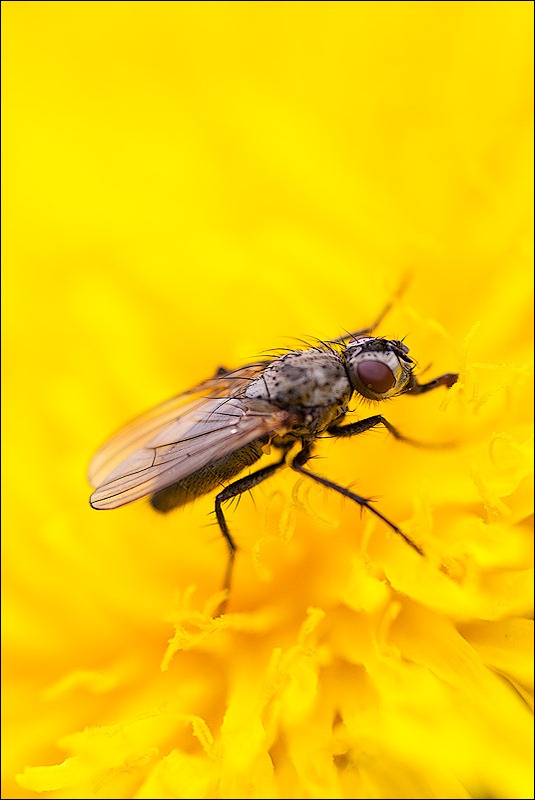 The only macro shot I could muster |
Friday, 17 May 2013
Tuesday, 14 May 2013
Parental Care
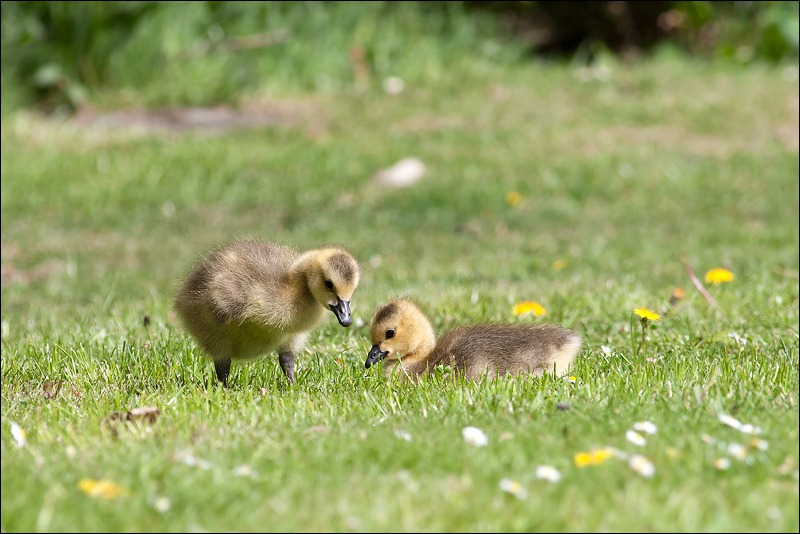
| With the odd exception, May this year has been more like March as far as the weather is concerned, showers most days and a cold strong wind. Still, it’s nice to see that mother nature is continuing on regardless, so, with the forecasted weather very unpredictable over the coming week, here’s a few images of some Canada Geese youngsters exploring their surroundings under the watchful eye of their parents, just to keep things ticking over. |
 |
 |
 |
 |
 |
 |
Wednesday, 8 May 2013
What a difference the Sun makes
| This day seemed to finally be the first, long awaited day that actually felt like summer. With temperatures reaching the dizzy heights of 17 degrees, little of the cold winds we’ve been typically experiencing and best of all – sunshine – with barely a cloud in the sky all day! So with camera bag packed, decked in low visibility ware I headed out into the wilds with a friend to make the most of this meteorological rarity. |
| Roe Deer crossing a woodland path |
 |
 |
 |
| Reed Bunting posing in the bright sunlight |
 |
 |
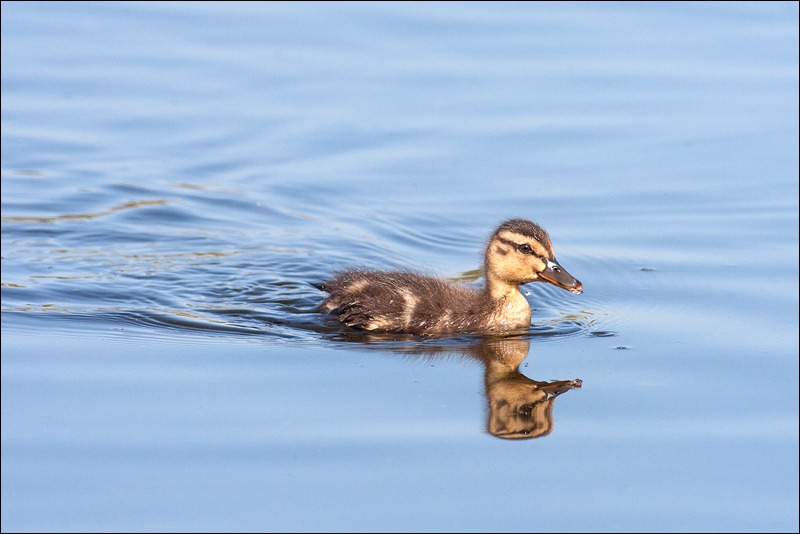
| A Mallard family with their lively ducklings |
 |
 |
 |
| A couple of Robins darting back and forth |
 |
 |
| Even a Brown Rat made a timid appearance |
 |
 |
| Finally seeing some undergrowth coming up especially the Ferns which would normally be waste high by now. With the late spring we had, I would say that nature seems about four weeks at least late this year. |
Sunday, 5 May 2013
A ‘Calming’ day at St Marys
| This was one of those days I was looking forward to get out and about. For the last few days it had been forecast to be wall to wall sunshine, the wind abating to take advantage of the reasonably warm temperatures so with these prospects it was easier to get up at 5:30am on the day. The plan was to make the most of the sunshine and try and photograph birds in flight, specifically the Swallows and Sandmartins around the cliffs around the St Marys end of Whitley Bay – at least that was the plan. It was overcast when I got up and by the time I had set off there was rain in the air, still, they couldn’t have got a clear blue skies completely wrong so I was still hopeful. Arrived on location before 7:00am and at least the rain was gone but it was still cloudy but looking better, however without the bright sunshine I had no chance of getting the fast exposures needed for fast moving small birds not to mention the improved abilities I would get for the camera to ‘lock on’ to the subject, so as the tide was coming in I decided to take the opportunity to photograph any waders about. On the way I stumbled across a pair of Warblers which appeared to be building a nest on the ground, a very precarious place considering its exposed location near to some very public paths. I watched them for around twenty minutes, taking nesting material to the location but didn’t want to get too close and disturb them and moved off to the shoreline. |
 |
 Crow with Whitley Bay Lighthouse as a backdrop |
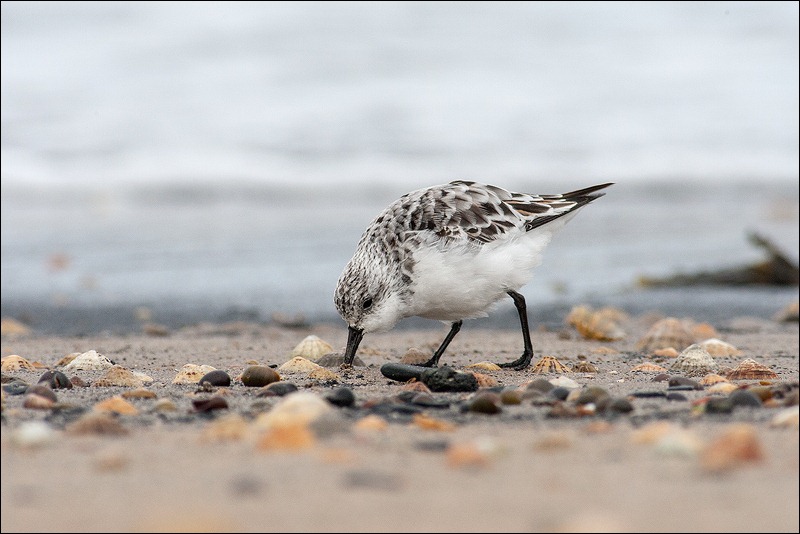
| I settled for a location where there were some feeding Sanderlings and that people wouldn’t normally walk past particularly as the tide was coming in, it would soon be impassable. After patiently waiting around twenty minutes for the tide to bring them closer to me and for them to get used to my presence and was just getting some shots off when a dog walker came along, his dog chased off the birds. He had decided to come this way despite it now being almost impassable with the tide almost now blocking the route. I was, to say the least, annoyed. I decided to move further north to my usual location for catching waders and surprisingly this section was empty so again, I waited patiently for the mixture of Sanderlings and Turnstones to come to me. Again, after managing to get some shots off after about thirty minutes of waiting, a couple with their two dogs chased away the birds so I moved up to the end of that section of the beach now cut off by the tide, but not before giving them a dirty look. They continued to follow me even though there was no point in it, there was nowhere for them to go and again scared the remaining birds off where they then promptly walked back. Miles upon miles of beach for them and they chose this thirty meter dead end stretch. I’m sure on both this and the previous occasion, it was done out of sheer malice as it would have had to have been inconvenient for them to do what they did. I was, to say the least, getting angry. |
 |
 |
 |
 |
 |
 |
 |
 |
| As it was getting brighter with some breaks in the clouds, I decided to go with my original plan and went to what I thought would be the best location to catch the Swallows and Sandmartins. As I approached the location I was met with the sight below. As far along the beach I could see, just dog walkers, everywhere! Drudging aimlessly along with their dogs looking miserable and grey, not interacting with anyone and seemingly oblivious to their surroundings. Images of the series ‘The Walking Dead’ came to mind and I could imagine if some zombie apocalypse was to occur here, this scene would still be the same, just mindless individuals, a slave to a daily routine they’re barely aware of. As I approached I half expected them to try and eat my brains and swear I could even hear some moaning but they were oblivious to me. Maybe I had been too harsh on the other dog walkers who had ruined my earlier enjoyment. Maybe I gave them too much credit for being human and they simply don’t know what they’re doing. |
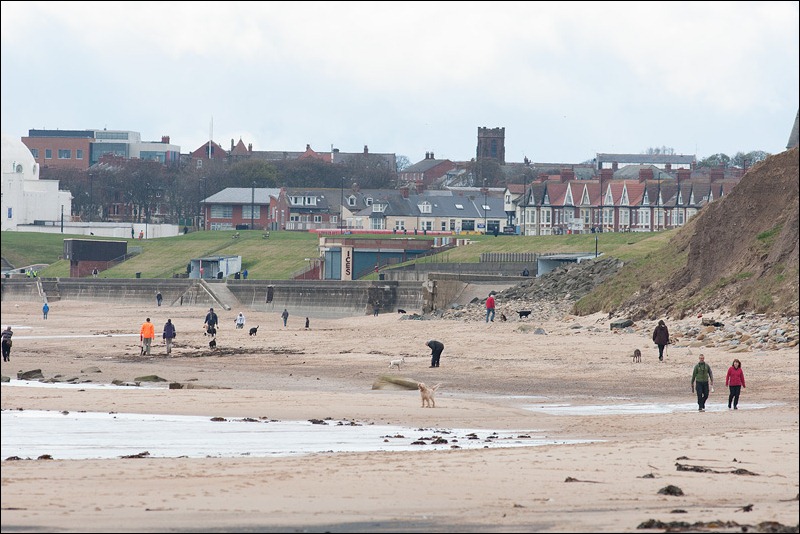 Zombies…err, I mean dog walkers along Whitley Bay beach |
| Anyway, with brain un-eaten, I made my way along the cliff face and with the sun now finally out some swallows started to appear though in small numbers. However, amongst the high tide line around the rocks and seaweed, the flies were out in force which meant an all you can eat buffet for numerous birds. Despite my having to still take the regular occurrence of a dog barking at me or sniffing around my crotch (no apologies from the owners) I was still able to get some images as the birds were only temporally put off by these interruptions and soon returned to their feast. Swallows, Sparrows, Turnstones, Pied and Grey Wagtails and a Stonechat were all spotted taking advantage of the abundance of food. Unfortunately, with 500m lens in for repairs, many opportunities were lost with the 400mm lens though on a couple of occasions Sparrows and Wagtails got so close that I couldn’t focus on them. I also had exposure problems with the contrast between bright light reflections and dark shadows. |
 Not the inflight photo I'd hoped to get of a Swallow |
 Turnstone amongst the flies |
 Sparrows too making the most of the abundant food source |
 |
 Pied Wagtail coming almost too close to focus on |
 |
 Sparrow with its catch |
| As if the dog walkers hadn’t already raised my blood pressure levels enough, when I checked out one of my favourite locations around this area, St Marys Wetlands, I was met with a scene of destruction. It was like vandals had come along with diggers and had completely obliterated a large section of the area of wildlife sanctuary. I don’t know the reasons for this destruction and I’m sure those who made the decision to do so had some reasoning behind it, but I wonder if they understand the terminology ‘ecosystem’. The area removed was a large section of cover for birds and mammals, the only area within the wetlands itself. In the last few years there seems to have been decisions made like this, that beggars belief such as was digging up the Rabbit warrens and sticking up bird tables in odd, random locations which just serve to obstruct the view and had no purpose as they have never been used. The image below shows the current view of which, previously you would not be able to see the horizon. The second image shows the view a few years ago with the background bushes and shrubbery now gone. I believe the Foxes shown had a den within that area which also gave them general cover. Where once you could sit quietly at this location and see a Fox in daylight, you can see now that there is no way a Fox would walk over that open ground. The final image shows other destruction with the remaining background trees and bushes showing the type of cover that was removed here. |
 |
 |
 |
| I don’t know who owns this area, whether its the local council or some nature organisation, with all the complaints of cutbacks and lack of funding, it seems crazy that they have gone to the expense of doing this. Even if they do have a plan (I can find nothing about it) as to doing this, it has ruined what was a perfectly good Eco system which will take years to recover from. What you have now at St Marys Wetland is a pool of water for seagulls and some waste ground. |
Subscribe to:
Posts (Atom)


