| I find it interesting to look back at previous years at the same time, to see what was about and what I was photographing at any one particular time. It’s not only a record of what is about at any particular time of year, but how much as time goes by, nature changes as does my own ability to photograph it. Every now and then I like to go back through my photographs and delete older ones as I improve, though I still like to keep some of the older ones just as a record of the past. This collection goes back to 2006 when I moved into digital photography and I’ve tried to put together a couple of images from each of those past years at the same time of the year. At the beginning of June should be a busy time – life is in full swing with animals bringing up offspring and plants in full growth – but I was surprised to find it hasn’t always the most productive time for me. Present Most activity, as expected, seems to involve parents bringing up their young, birds sing loudly proclaiming their territory and insects are everywhere. Some of the images I achieved last year couldn’t be replicated. It wasn’t as simple as going to the same place around the same time and see the same bird or animal performing the same behaviour and just goes to show nature is constantly changing. |
 |
 |
 |
 |
 |
2013 Much the same as this year and, although my 500mm lens was being repaired, I don’t think it meant any missed opportunities as it seemed quite quiet considered the expected activity around. The Reed Bunting encounter was perfect for me as I was able to get close without it being to bothered by my presence. Mallards and Geese were a plenty with their young and again very approachable with just a 400mm lens. |
 |
 |
2012 I could find very little in the way of photographs taken this year, probably more down to my ability to get out as anything. Warblers were the theme of the day. |
 |
2011 Skylarks were in their numbers in the same place where today, they’ve been replaced by Reed Buntings. Same activity though, busy feeding their young. New camera this year – the Canon Mark III |
 |
 |
2010 The locations where I saw the birds in 2010, no longer have them in the same numbers or in the case of the Coots, they have gone completely due to dog owner irresponsibility at the small lake. The Sand Martins are there but in much smaller numbers, more down to the naturally changing landscapes of their nesting sites where the sand banks have eroded making a less than ideal nesting location. New lens this year, the Sigma 500mm taking over most of my wildlife photography though the Canon 400mm was still getting used as shown by the Sand Martin image below. |
 |
 |
2009 Not sure what happened this year, but I couldn’t find any images at all for June so just a Kingfisher from the following month. This year also saw my taking the plunge into getting a ‘professional’ camera, the Canon Mk IIn. This felt so much better to use than the 30D I was using and image quality also seemed an improvement. |
 |
2008 Another slow time of year for 2008 and very few images to show for it, in fact this is the only wildlife one I could find. |
 |
2007 To big steps in my photography this year. The purchase of the 30D but mostly by getting the Canon 500mm f5.6. What a difference that made both quality of images but also being able to get much closer to the wildlife, though the somewhat fierce looking Fox below was an exception in achieving that! I also replaced the kit lens with the Canon 17-40 mm lens also making a big difference to my landscapes. |
 |
 |
2006 My reintroduction into photography and in this case, digital was through a Canon 350D, a Tamron 70-300mm lens and the standard ‘kit lens’. The Tamron lens was awful – very slow and soft, the kit lens was ok but you had to use it in the right way, but I loved the 350D. It gave me a love of photography all over again. Prior to this my camera kit consisted of a couple of Olympus cameras and a statement of lenses, the longest being a 300mm mirror lens - not recommended for wildlife unless you live in a very sunny place! |
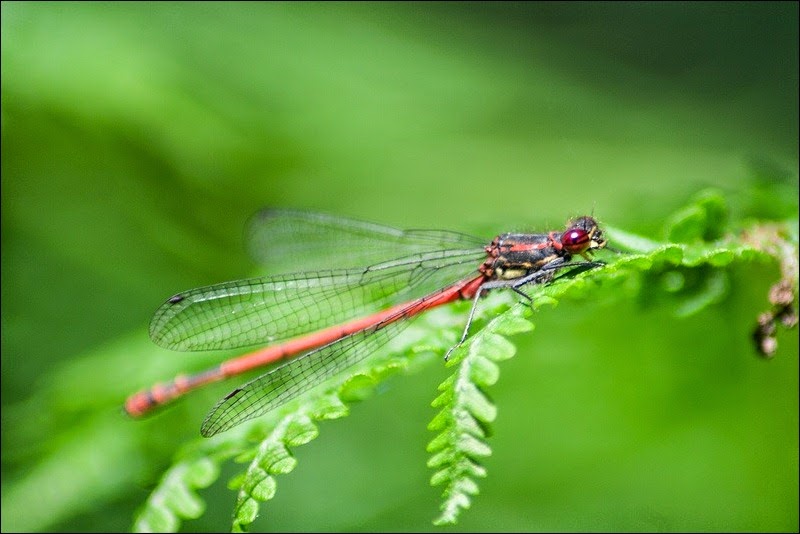 |
 |
| I like to think during these years, my photography has improved as certainly my knowledge of wildlife and nature has. I feel my photography has had an impact too through various introductions – a professional body camera, the 400mm then 500mm lens. Also interesting to see the Damselflies differences. The one taken in 2006 using the Tamron zoom and very soft in quality and the most recently taken one using the Sigma 105mm lens, technically much better. |
Showing posts with label Common Crow. Show all posts
Showing posts with label Common Crow. Show all posts
Saturday, 7 June 2014
Friday, 31 May 2013
Newcastle City Wildlife
| Preferring to spend most of my photography time out in the rural or countryside, it’s easy to forget that there’s wildlife all around us. Apart from the obvious birds that live around the houses here, within a short walking distance there are some very accessible wildlife which can be seen and photographed up close having become accustomed to the presence, noise and the hustle and bustle of human city life. There are two notable locations in Newcastle – the nesting colony of Kittiwakes on the Tyne Bridge and Leazes Park. |
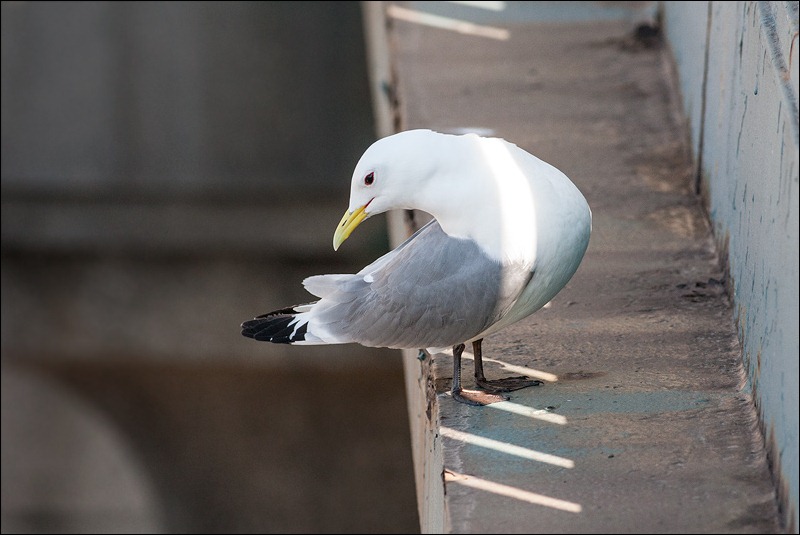
The Tyne BridgeAt this time of the year a large colony of Kittiwakes nest on Tyne Bridge and walking across you can be within a few feet of their nests without realising it, with the noise of the traffic it’s easy not to hear the loud shrills of the birds nesting by or flying over head. Apart from the two main bridge pillar supports they were also nesting on the various ledges and nearby buildings, particularly on the Newcastle side. Currently, they seemed to be on their eggs while the partner brought in food for them or more nesting material. A 400mm lens was enough to get some close up shots of them both on the bridge and flying back and forth. I’d hoped to get an image of a flying bird with a background of the bridges but the difficulty of tracking and keeping them in focus them with a constantly changing, cluttered background and with few opportunities of their obliging me by being in just the right spot at just the right distance, made this attempt unsuccessful though I was able to get some other decent images. |
 Snoozing in the shade |
 |
 |
 |
 Bringing in nesting material |
 Regurgitating a ready meal for his mate – very appetizing! |
 Watching the passer-by's |
 |
 View from the Tyne Bridge |
Leazes ParkA short walk from the Tyne Bridge is Leazes Park, a city park though not particularly large has plenty of birds (surprisingly no Grey Squirrels yet) that can be approached up close. The council has done a bit of work on the place since my last visit, most noticeably the creation of some small islands with wire mesh around which have attracted some nests, one of which had a Moorhen with some fledglings. A Heron was also on one of these man made islands – the first time I’ve seen a Heron, normally a shy bird, in the park. As you would expect in a park, people were feeding the birds, mostly bread which isn’t particularly healthy for them. Worse, the Moorhen was taking chunks of this white bread back to feed its young. What with last week a Robin feeding its young with my pasty left overs! Of course all this freely available supply of food meant no shortage of photographic opportunities. First to take advantage were the Canada Geese and of course Pidgins and Mallards but also swooping in and out as was the Moorhen and more timid Tufted Ducks. A very territorial Crow also came down for the unhealthy snack on offer. Magpies were also present, though, like their country counterparts, were still a bit wary of people. |
 Canada Goose |
 Moorhen with ‘food’ for young |
 |
 Female Tufted Duck |
 A scary looking male Tufted Duck |
 Not so scary looking male Tufted Duck |
 |
 |
 A Moorhen on one of the man made islands |
 |
 A rather cautious Magpie |
Sunday, 20 March 2011
First warmth of Spring
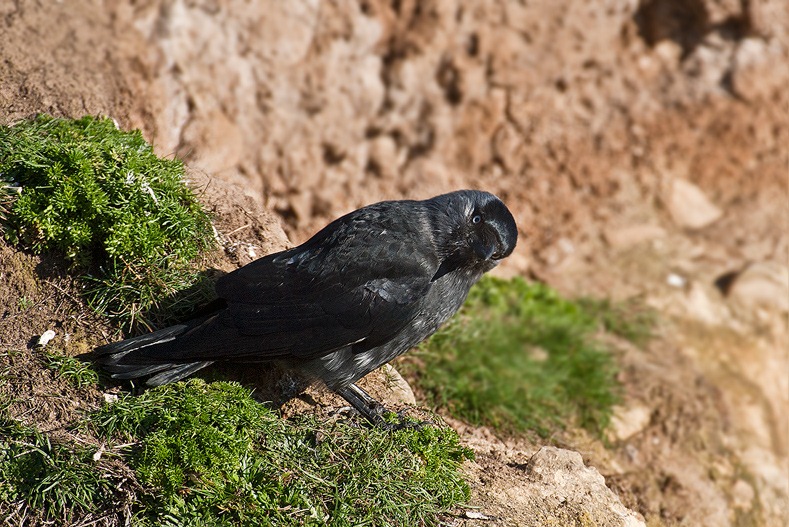
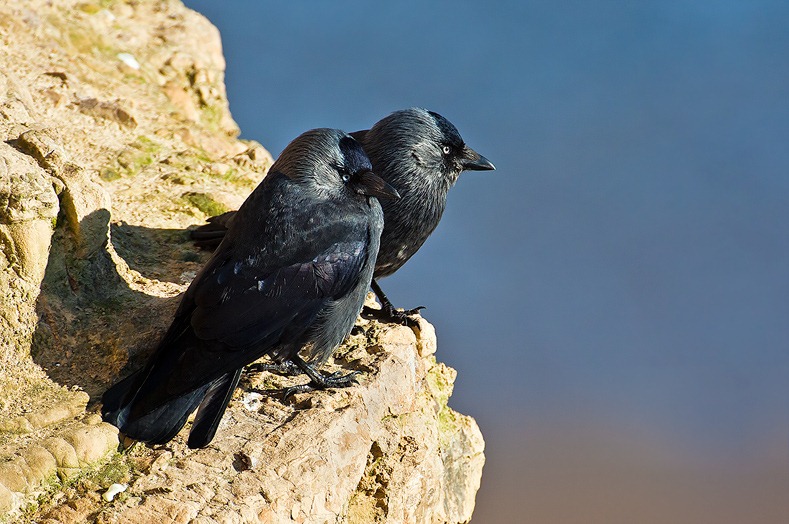
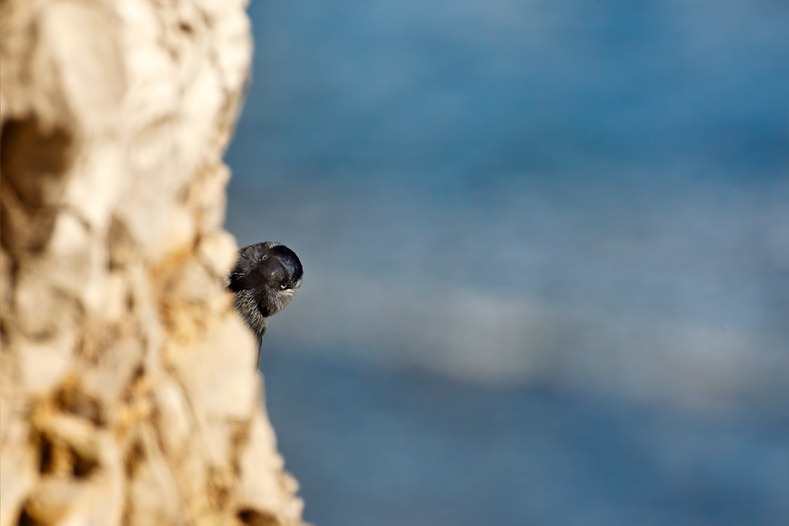
| I thought today, I would do a quick 3km walk along the cliffs from Souter Lighthouse to South Shields, with the weather looking to be sunny and reaching the heights of 10 degrees. I got there around two hours after sunrise so the sun was still quite low in the sky at this time of the year though it was quite strong – not good for photographing landscapes but giving me a good shutter speed for photographing anything else. I soon came across my first subject to photograph, some Jackdaws on the cliff edges. They showed a certain wary curiosity towards me, not quite sure how they perceive me pointing a large lens directly towards them. There’s no doubt that some animals see this action as some kind of threat, the corvidae family are supposed to be very intelligent and these Jackdaws, after a while, settled down but would still every now and then just look at me as if to wonder what to make of me. The sun wasn’t such that it was too strong yet and was just at the right angle to make the birds stand out. I just had to make sure I waited before taking a picture, that the light caught their eyes. |
 |
 |
 |
 |
 |
| A short distance on was Marsden Rock, a 100 foot sea stack near the cliffs. This was once quite a famous local attraction, up until 1997 being much larger with an arch which, with erosion and a storm, broke away from the main section leaving a small stack next to it which was demolished. It’s used as a nesting area for seabirds of which I could see Cormorants and various Gulls and the odd Fulmer. |
 Marsden Rock |
 |
 A smaller stack near Marsden Rock |
| Further along the walk and inland next to the cliffs is an area of grass known as The Leas used for people walking there dogs, cyclists and just general walkers and at first glimpse, not much for wildlife, but I could hear some Skylarks. Unfortunately I had forgotten to pack my binoculars and lovely sounding birds were not in the air singing as you would normally expect but in the grass which in many areas just tall enough to hide them. After some eye straining, I eventually saw one nearby which popped its head up and was clearly responding in song, to another singing Skylark nearby. Obviously they were sorting out territories as the neighbouring one came over and a brief skirmish ensued. I didn’t manage to get anything in focus from this as I had a converter on and was manually focusing anyway due to the difficulty of getting a focus lock with such a small subject in grass. Hearing Skylarks always make me think of warm, sunny summer days from my childhood and it gives me a good feeling. |
 |
 |
 |
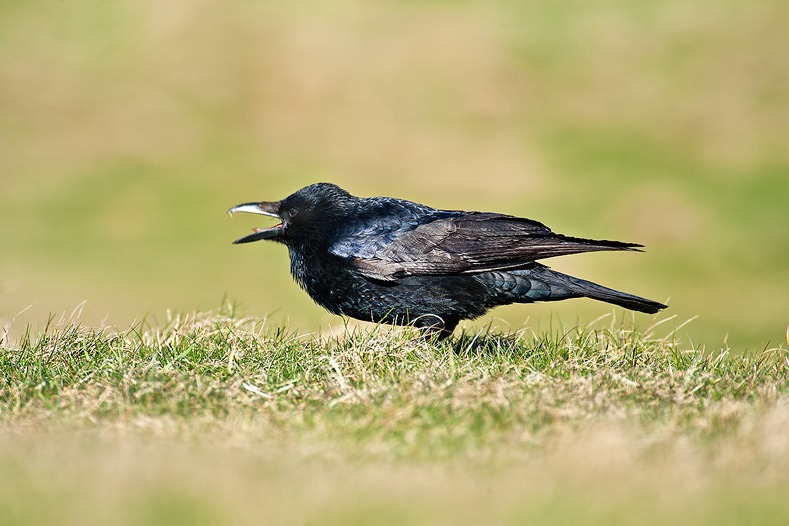
| No sooner had I just managed to get closer enough to get a reasonable size in my view finder when a dark shadow flew over and the edgy Skylark few off. I was just a few Crows. These seemed a bit more obliging to be photographed. Crows are very common in this country and over looked by me as a photographic opportunity. It’s not until you sit and watch them that you realise they are quite photogenic characters, though from a technical point of view, difficult because of the dark plumage – though nothing normally a bit of exposure compensation can’t sort, or some editing at the RAW stage on the computer. My walk finished at Trow Quarry where I had hoped to maybe spot a Little Owl, but without the binoculars, I had little chance. |
 |
 |
 |
 |
 |
Subscribe to:
Posts (Atom)


